
Babayola M. Toungo
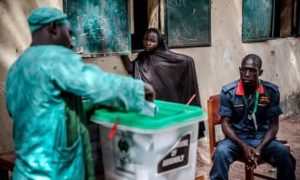
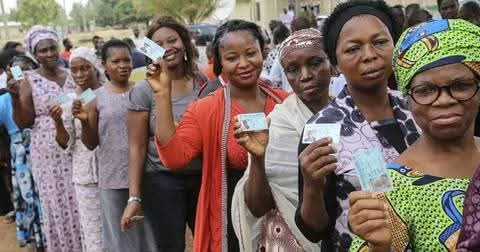
There is something profoundly obscene about a political class that presides over mass poverty and then turns around to exploit that same poverty as a means of acquiring or retaining power. As Nigeria approaches the 2027 elections, the spectacle of politicians offering desperate citizens a few banknotes, bags of rice and other paltry inducements in exchange for their votes exposes the cynical underbelly of our democracy. The people are impoverished by a system they have little control over, only to be bribed with crumbs to legitimise its continuation.
Read also: RETROSPECT: See What ‘Builder Dikko Radda’ Has Done Again
This is not generosity; it is political exploitation. It is the conversion of human desperation into electoral capital, the commodification of citizenship and the mortgaging of the collective future for the immediate gratification of a hungry present. Politicians who should be competing over ideas, economic programmes and credible plans for social transformation instead find electoral value in the very deprivation they ought to be addressing.
But the indictment cannot end with the political class. Every time a citizen surrenders a vote for a pittance, the machinery of political patronage receives another lease of life. The tragedy is that the price paid for that moment of relief is borne not by the politician who buys the vote, but by the community condemned to endure another cycle of poor governance, diminished opportunity and broken promises.
The irony is profound. Politicians who should be judged by their capacity to create wealth, generate employment and improve living conditions have increasingly turned poverty into a bargaining instrument. Instead of presenting credible programmes for economic transformation, some seek to purchase public consent with handouts that cannot sustain a household beyond a few days.
Yet, it would be simplistic to blame the poor alone. A hungry citizen who accepts money may understand the consequences but be overwhelmed by the urgency of immediate survival. When poverty becomes unbearable and promises of better governance lose credibility, the cash offered today can appear more valuable than the uncertain benefits of tomorrow.
This explains the transaction; it does not justify it. The politician who exploits hunger to acquire public office bears a profound responsibility for undermining democratic choice. But citizens must also confront an uncomfortable truth – when votes are exchanged for temporary relief, the collective future is mortgaged for immediate survival. We often say that a people get the leadership they deserve. But this argument must not become an excuse for absolving political elites of responsibility. Rather, it should be a challenge to citizens to recognise their own agency and reclaim their place in the governance of their society.
The fundamental problem is that our politics has increasingly transformed citizens from rights-bearing owners of the state into clients dependent on the generosity of political patrons. Public resources are presented as personal gifts. Government projects become favours. Scholarships, social assistance and other public interventions are celebrated as acts of benevolence rather than obligations of governance.
This is how patronage sustains itself. Politicians distribute crumbs from the public table, cultivate gratitude and expect loyalty in return. Citizens are encouraged to ask what a politician can do for them personally instead of demanding what government must do for the entire community. The ideological challenge before us is to dismantle this culture of political dependency and restore the principle that government is a public trust, not the private property of those who occupy public office.
Taking back government begins with political consciousness. Citizens must learn to judge candidates by their character, records, policies and capacity to deliver measurable results. They must demand clear answers on employment, education, healthcare, security, infrastructure and economic opportunity rather than allow campaign rallies and handouts to substitute for serious public debate.
Read also: I’ve Paid Over N7bn As Compensation To Property Owners—Uba Sani
But individual consciousness alone is insufficient. The people must organise. Farmers, workers, traders, artisans, professionals, students and community associations must develop collective platforms through which they can articulate their interests and hold political officeholders accountable. A fragmented electorate negotiating individually with political patrons will always struggle against organised interests seeking control of the state.
Citizens must also resist the manipulation of ethnic and religious identities for electoral advantage. No ethnic loyalty can substitute for economic opportunity, and no religious solidarity can compensate for failing public institutions. Our identities should enrich our common citizenship, not become instruments for distracting us from questions of material welfare and accountable government.
Equally important is the transition from personality-driven politics to institution-based governance. The objective cannot simply be to replace one politician with another while leaving the structures of patronage intact. Citizens must demand transparent budgets, accountable public spending, credible elections, independent oversight and institutions that deliver essential services as rights rather than favours.
There is also a need to rethink the relationship between poverty and political freedom. Emergency assistance is necessary where hardship is acute, but it cannot become a substitute for economic transformation. A government that distributes food without addressing why citizens cannot afford food is managing deprivation rather than overcoming it. Sustainable progress requires productive agriculture, decent jobs, viable small businesses, quality education and accessible healthcare.
Political parties, civil society organisations, labour unions, the media and community leaders must help create an environment in which citizens can participate freely, question authority and demand results. Vote buying must be challenged through lawful civic action, public enlightenment and the fair enforcement of electoral laws. The responsibility for protecting democracy cannot be placed exclusively on the shoulders of the poorest citizens.
Ultimately, taking back government requires sustained engagement beyond election day. Citizens must monitor public projects, scrutinise budgets, question elected representatives and organise peaceful campaigns around public-interest issues. Democracy cannot function effectively when the people disappear from public affairs after casting their ballots.
As the 2027 elections approach, Nigerians must decide whether they will continue to participate as clients seeking temporary favours or assert themselves as sovereign citizens entitled to demand accountable leadership. A few thousand naira may provide temporary relief, but it cannot compensate for years of unemployment, poor public services and lost opportunities. The poor should never have to choose between feeding their families today and exercising the democratic rights that could help secure their future.
The ultimate objective is not merely to change the occupants of political office. It is to change the relationship between the people and the state, making government answerable to citizens rather than citizens dependent on politicians. The people must understand that political officeholders are temporary custodians of public authority, not owners of the commonwealth. The ballot is not a commodity to be sold; it is an instrument of collective power.
Read also: RWANDA GENOCIDE: COAS VISIT TO KIGALI MEMORIAL REINFORCES LESSONS ON NATIONAL UNITY, TOLERANCE
If citizens continue to exchange their future for temporary relief, they should not be surprised when the same conditions return after every election. But if they organise, defend their rights and demand institutions that serve the public interest, they can begin to reclaim the power that democracy promises them.
The real question in 2027 is not simply who will govern Nigeria. It is whether Nigerians are prepared to reclaim government and governance from the political class and make public power serve the public good.