


Kebbi, the Land of Equity. A state blessed with beautiful cultures, traditions and people, kebbi, historically blessed with great leaders who are legendary, is celebrating three and a half decades of statehood, the leaders who laid the foundations, and Governor Nasir Idris’s administration that is reshaping the physical face of the Land of Equity and making it exemplary among its peers.
By Ibrahim A. Jombali
It is old enough to have a history, yet young enough to remain a work in progress. It is mature enough to judge its leaders, yet still youthful enough to dream of becoming something larger than its present reality.
On August 27th, 1991, Kebbi State was carved out of the old Sokoto State and entrusted with the difficult task of inventing itself. What emerged was not merely another administrative unit on Nigeria’s map but a political community bound by history, culture, commerce, and a shared ambition for progress.
Today, as Kebbi celebrates its 35th anniversary, the occasion calls for something more than ceremonial speeches and anniversary banners. It demands an honest assessment of how far the state has travelled, who helped move it forward, and what remains to be done.
The story of Kebbi is, above all, a story of cumulative leadership. States are not built in electoral cycles. They are constructed layer by layer, administration by administration, often by leaders who never fully enjoy the fruits of the seeds they plant.
The state’s founding generation inherited little except a mandate to create institutions from scratch. The earliest administrators were confronted by a challenge familiar to many newly created states: how to transform a bureaucratic concept into a functioning government.
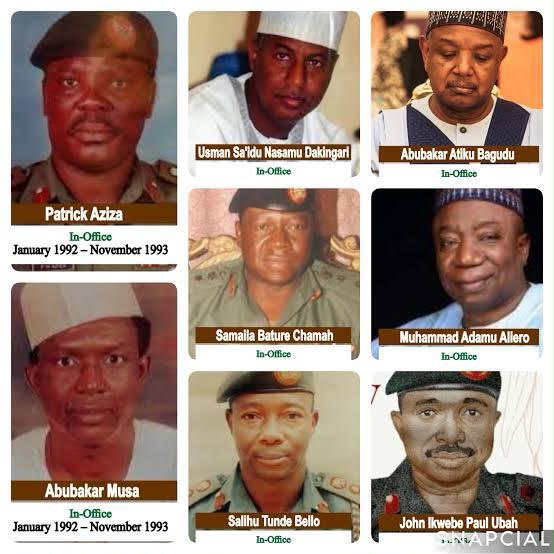
Major General Patrick Aziza, the pioneer administrator, performed the difficult work of assembling the machinery of statehood. Ministries had to be established. Civil service structures had to be organised. A capital city had to begin functioning as the nerve centre of governance.
Such responsibilities rarely attract public applause. Yet without them, no subsequent achievement would have been possible.
The same may be said of the administrations that followed.
Abubakar Musa, the state’s first civilian governor, represented the beginning of democratic participation in Kebbi’s affairs. Salihu Tunde Bello, John Ubah, and Samaila Bature Chamah presided over a period when continuity itself was a developmental asset. Their years may not be remembered for grand projects or headline-grabbing programmes, but they contributed to the institutional stability that every young state desperately requires.
In politics, there is often an unhealthy obsession with beginnings and endings. The middle chapters are forgotten. Yet it is in those quiet years of consolidation that states acquire resilience.
Kebbi’s leaders of the 1990s deserve recognition for precisely that reason.
Then came democracy’s second coming.
The election of Muhammadu Adamu Aliero in 1999 coincided with Nigeria’s broader democratic rebirth. His administration provided something Kebbi had rarely enjoyed before: continuity. Eight years in office allowed the government to think beyond immediate administrative concerns and begin planning for longer-term development.
If the first decade of Kebbi’s existence was devoted largely to creating institutions, the democratic era was increasingly about strengthening them.
Saidu Usman Nasamu Dakingari continued that trajectory. His administration inherited a state no longer struggling to define itself but seeking ways to expand public services and improve infrastructure. His tenure helped bridge the transition between Kebbi’s formative democratic years and the more ambitious development agenda that followed.
Yet if one administration fundamentally altered how outsiders perceived Kebbi, it was Saidu Usman Nasamu Dakingari for his massive rural infrastructure development in all the nook and cranny of the state.
Before Bagudu, Kebbi was often viewed through the narrow lens of geography: a predominantly agrarian state in Nigeria’s north-western corner. During his administration, agriculture became not merely an economic activity but a political and developmental identity.
Successful states do not merely administer territory; they cultivate a reputation.
Yet anniversaries are not merely opportunities to look backwards. They are occasions to evaluate the present.
And that brings us to the administration of Comrade Dr Nasir Idris, Kauran Gwandu.
Every governor inherits a challenge peculiar to his moment.
For Idris, the challenge has been visibility.
Not political visibility, but physical visibility.
Agricultural transformation, institutional reforms, and policy improvements are often difficult for citizens to see. Roads are different. Bridges are different. Hospitals, secretariats, and urban renewal projects are impossible to ignore.
Under Governor Idris, Kebbi has embarked on a programme of infrastructure expansion that is rapidly redefining the state’s physical appearance.
The significance of this should not be underestimated, undermined , or even overlooked.
In most developing nations, infrastructure serves as the most visible expression of governmental intent. It signals confidence. It communicates ambition. It tells citizens that the government is investing not merely in administration but in the future shape of society itself.
The new state secretariat, expanding township roads, strategic highways, hospital modernisation projects, human capital development, rural development, and urban renewal initiatives are, therefore, more than construction projects. Collectively, they represent an attempt to give Kebbi a more contemporary identity, a new face of progress and development.
A state that wishes to compete economically must first become physically connected. Expectedly,
Farmers need roads.
Traders need roads.
Students need roads.
Patients need roads.
Read also: AFCSC SENIOR COURSE 48 STUDENTS ON AFRICAN STUDY TOUR VISIT NIGERIAN CONTINGENT 11 IN THE GAMBIA
Investors certainly need roads.
Infrastructure is often dismissed as concrete politics. In reality, it is economic policy poured into cement.
This explains why the current administration’s focus on roads, bridges, and public facilities carries significance beyond their immediate utility. These projects are helping to reshape how Kebbi sees itself and how others see Kebbi. It is opening a new page and creating a new dawn for a state that has metamorphosed for 35 years
For much of its history, Kebbi’s development narrative was tied to its agricultural strengths. Under Idris, that narrative is expanding to include urban transformation and modern public infrastructure. The result is a state increasingly attempting to balance its rural strengths with a more ambitious urban future. This is a beautiful commentary on Kebbi’s ambitious drive to greatness.
The administration’s investments in education, healthcare, and broader human development are equally important. They firm the bedrock of the state’s recent stories of development.
At thirty-five, Kebbi possesses advantages many younger states still seek. It has a stable political identity. It has an agricultural brand recognised nationally. It has functioning institutions. It has growing urban centres. It has an increasingly ambitious development agenda. It has a defined focus.
Most importantly, it possesses a leadership tradition that, despite inevitable imperfections, has generally understood governance as a relay rather than a sprint. The presence administration has demonstrated more than an ordinary desire and resolve to sustain and improve that tradition.
Aziza established.
Musa consolidated.
The succeeding administrators strengthened.
Aliero democratised.
Dakingari continued.
Bagudu expanded.
Idris is giving kebbi a new physical identity
Each chapter is incomplete without the others.
This is perhaps the most important lesson of Kebbi’s thirty-five years. Development is rarely the achievement of a single leader. It is the accumulation of many administrations, many policies, and countless contributions by ordinary citizens whose names never appear in official histories.
The farmer in Argungu.
The trader in Yauri.
The teacher in Jega.
The civil servant in Birnin Kebbi.
The entrepreneur in Zuru.
The student preparing for a future not yet imagined.
Together, they have written Kebbi’s story as much as any governor. They did so with patriotism that is beyond question.
As the state enters its thirty-sixth year, the central question is no longer whether Kebbi can develop. The evidence suggests it can. The dream is achievable. Kebbi will be better and greater.
For now, however, Kebbi has earned the right to celebrate. The people have reasons to hope and smile, believing that their lofty dreams can be actualised.
Thirty-five years ago, it was a newly created state searching for an identity, a direction to reach its desired destination, and fulfil the fulfil the dreams of its founding fathers.
Today, it is a state increasingly confident in its purpose, proud of its history, and determined to shape its future. The enthusiasm of the people is beyond the ordinary.
That is no small achievement.
Happy anniversary, Kebbi State.
Thirty-five years of statehood.
Thirty-five years of institution-building.
Thirty-five years of leadership.
Thirty- five years of eventful journey leading to the desired land of greatness. Indeed, Kebbi is great !
Read also: TROOPS NEUTRALIZED THREE KIDNAPPERS, RESCUED VICTIM IN EDO
And, perhaps, the beginning of the most consequential chapter , all thanks to Governor Nasir Idris for being an agent of positive change and transformational leadership. Such vision expressed by the governor is heavily inspiring
. Ibrahim Abubakar Jombali Special Adviser on Public Enlightenment and Orientation to the Executive Governor of Kebbi State