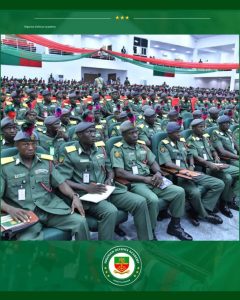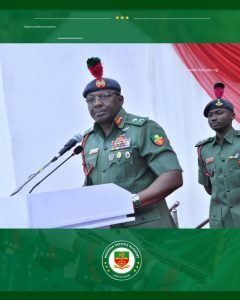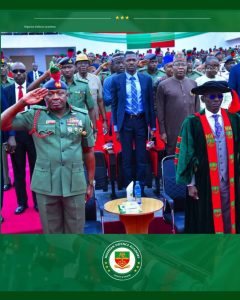

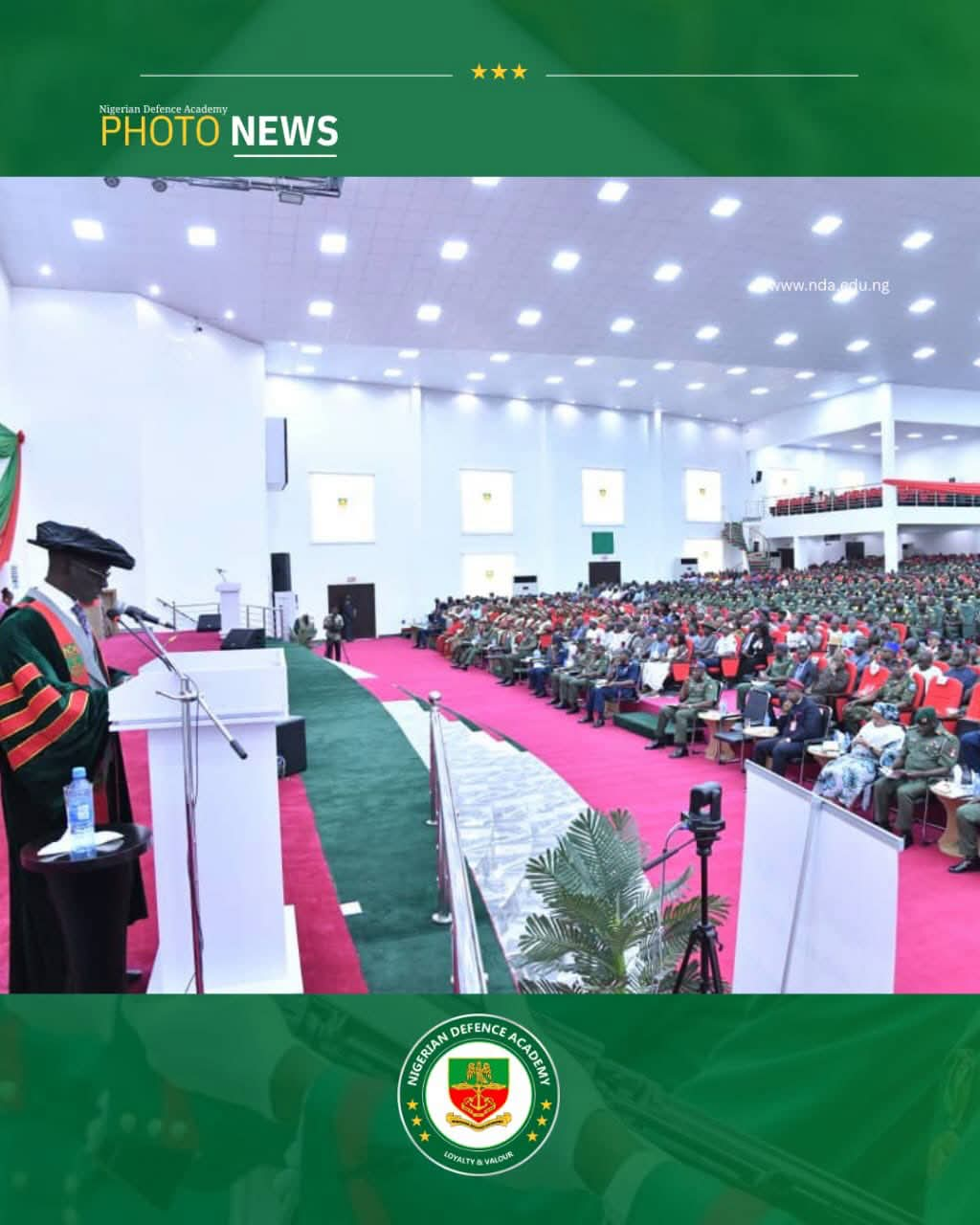
The guest lecturer at the Nigerian Defence Academy Twenty – Fourth Convocation Lecture in honour of cadets of the 73 Regular Course and postgraduate students, former Chief of Defence Staff, General LEO Irabor, has stressed the need for improved civil-military relations in Nigeria anchored on professionalism, mutual respect, effective communication, and accountability.
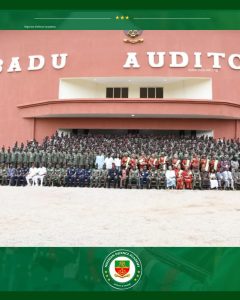
A statement signed by Major Njoka Irabor Academy Public Relations Officer Nigerian Defence Academy said this charge was made at the Ribadu Auditorium, Afaka, Kaduna, on 9 September 2026. The occasion was also graced by the Commandant NDA, Major General Oluyemi Thomas Olatoye, the Deputy Commandant, the Provost, principal staff officers, and other invited guests.
The Commandant NDA, General Olatoye, in his welcome address, recognised the contributions of the guest speaker, General LEO Irabor, senior officers, as well as the academic and non-academic staff. Furthermore, he reiterated the Academy’s commitment to producing competent officers equipped with leadership skills and intellectual capacity to operate effectively within Nigeria’s democratic system.
The Commandant asserted that understanding the constitutional roles of the Armed Forces of Nigeria, democratic institutions, and other stakeholders was fundamental to effective governance and national security. He noted that he was confident that the lecture would provide participants with valuable insights on the complexities of civil-military relations in Nigeria.
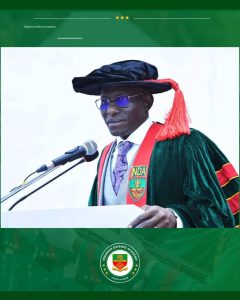
General Irabor, in his lecture titled “Civil-Military Relations in Nigeria: Governance and National Security,” gave an overview of civil-military relations in Nigeria, examined the interrelationship between civil authorities within the democratic framework, and identified strategies to address challenges to improving civil-military relations in Nigeria.
Read also: COAS SHARPENS COMBAT EDGE OF EXPANDING NIGERIAN ARMY, GRADUATES 91 RRI CTCOIN RECRUITS
The guest speaker noted that effective civil-military relations require a clear understanding of the respective roles and responsibilities of the military and civil authorities, emphasising adherence to constitutional principles and respect for democratic institutions as critical to maintaining national stability and strengthening public trust in the Armed Forces of Nigeria.
He further identified professionalism and institutional accountability as key pillars of a healthy civil-military relationship. He equally stressed that mutual respect and effective communication between the Armed Forces and civil authorities would promote national cohesion, build public confidence, and enhance the military’s effectiveness in safeguarding Nigeria’s territorial integrity and democratic institutions.
The guest speaker also urged participants, particularly the officer cadets and postgraduate students, to appreciate the broader responsibilities of military leadership in a democratic society.
He encouraged them to develop the intellectual capacity, professional discipline, and strategic understanding required to contribute meaningfully to national development and security.
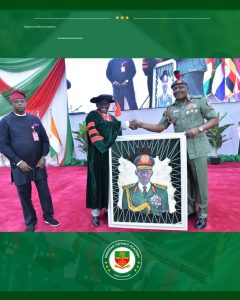
The event climaxed with the presentation of souvenirs to the guest speaker and a group photograph