


By Zubair Abdurrauf Idris
For ten days, the ancient city of Kaduna pulsed as Nigeria’s conscience. The question on every lip: how do we move food security from glossy policy papers to the dinner plates of 250 million citizens?
Read also: Over 5,000 People Benefits From German Supported Project in Kaduna
The answer took shape at Nigeria Public Relations Week (NPRW) Croc-City 2026, held April 16–25, where policymakers, farmers, communicators, and citizens forged what may be the most consequential agricultural blueprint in a decade — The Kaduna Food Security Declaration.
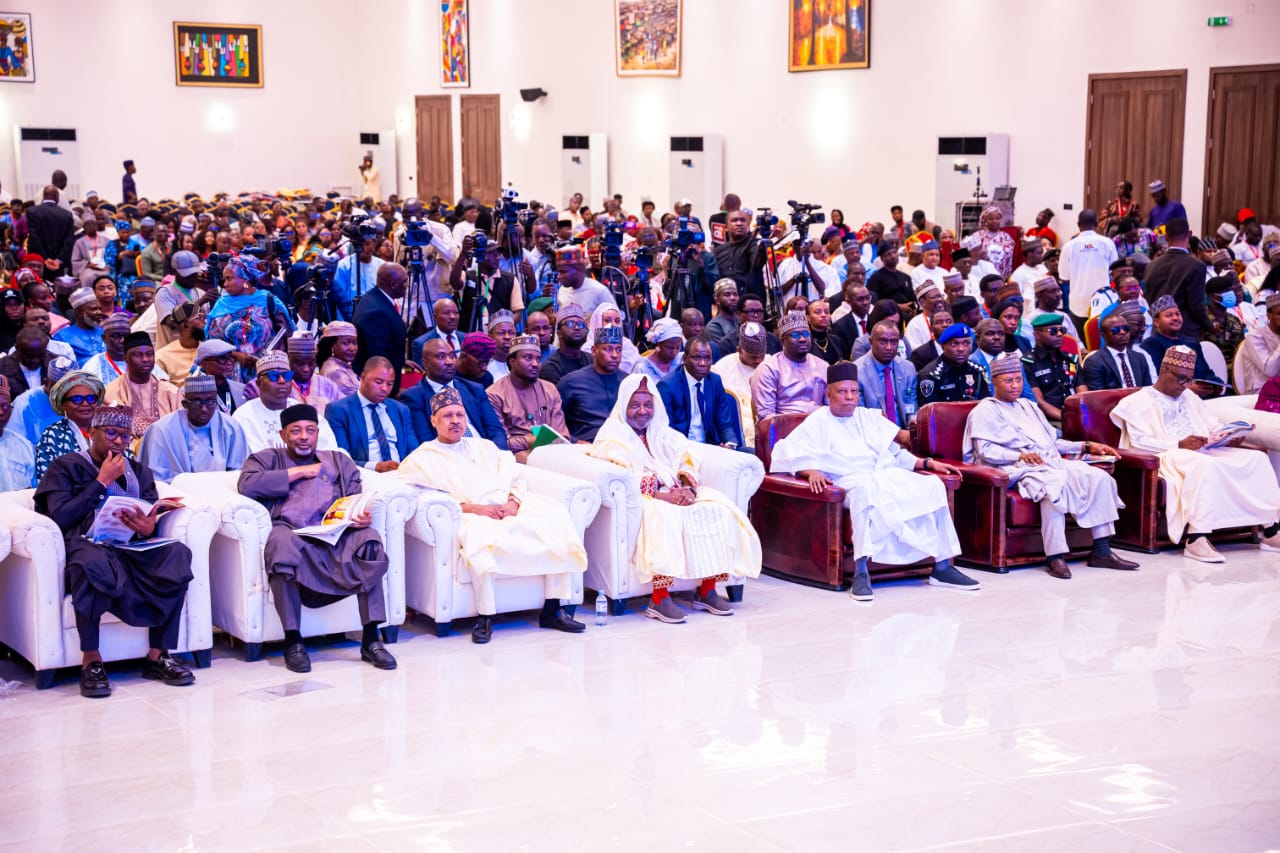
Convened by the Nigerian Institute of Public Relations in partnership with the Kaduna State Government, the National Conversation of April 21–22 inside the newly commissioned Brigadier General Abba Kyari Banquet Hall was no talk shop. With Vice President Kashim Shettima, Speaker Tajudeen Abbas, four cabinet ministers, and over 1,000 delegates from the 36 states and FCT, the hall bore the weight of a stark truth: “Where there is no food, there is no peace. Where there is no peace, there is no farming. Where there is no farming, there is no future.”
From Policy Paper to Public Plate
The theme said it all: “Food Security: From Policy Paper to Public Plate – The Imperatives of Public Relations.” As the NIPR President put it, “We do not suffer from policy drought. We suffer from implementation famine and a trust deficit.” The Declaration draws a new line in the sand: communication is no longer an afterthought. It is strategic infrastructure — as critical as fertilizer, feeder roads, and tractors.
The Kaduna Declaration: 44 Points, One Verdict after days of rigorous debate on “Can Nigeria Feed Itself in the Next Decade?”, delegates voted YES — but with eyes wide open. The verdict: conditional optimism. Nigeria has the land, water, and human ingenuity. What it lacks is coordinated will.
Insecurity: The Gun Before the Hoe
“No agricultural policy can succeed where farmers cannot safely access their fields.” The Declaration demands that insecurity in farming corridors be declared a national emergency, with specialised agro-ranger units deployed and the Kaduna Peace Model scaled to rural communities.
With 30–50% of harvests lost yearly to poor storage and bad roads, delegates declared it “economically wasteful, morally unacceptable, and strategically dangerous.” The fix: a National Post-Harvest Loss Reduction Programme to halve waste in five years through cold chains, storage clusters, and rural roads.
To bridge the chasm between promise and plate, a Presidential Council on Food Security Implementation was proposed — with teeth to track bottlenecks and publish an Annual State of Food Security Report for all Nigerians to see.
Our farming population is ageing. Youth see agriculture as punishment, not profit. The solution is repositioning farming as tech-driven agribusiness, bankrolled and dignified, to lure young Nigerians.
Fake News Is Starving the Nation
Mantra: Rumour Is the New Locust
“Rumour triggers panic buying. Panic buying creates artificial scarcity. Scarcity drives inflation.” Delegates endorsed a National Food Information Ecosystem — real-time price dashboards, community radio, and rapid misinformation response units. Information controls prices as much as supply.
Women Feed Nigeria, But the Camera Looks Away
The Declaration calls out the stereotype: “Men are shown with hoes. Women, who produce and process most food, are invisible.” The remedy: gender-inclusive communication, land reform, and messaging in local dialects that smash the “male, old, and poor” myth.
Despite a value chain worth over $32 million, livestock remains sidelined. The Declaration demands modern grazing reserves, ranching, robust data, and conflict-sensitive investment as strategic imperatives.
Talk to the Farmer in His Language
Mantra: One Message for All Is a Message for None
Delegates pushed for community radio, local-language hotlines, and palace-based networks with traditional rulers as Community Food Security Anchors.
“No food strategy is complete without comprehensive crop and livestock insurance.” Expanded agric insurance must give farmers a shock absorber against climate shocks and conflict.
The Verdict From the Floor
In a live poll, delegates said YES — Nigeria can feed itself in 10 years — but only if security, infrastructure, and politics will move from communique to farmland.
The Kaduna Call-to-Action: Five Non-Negotiables
Declare insecurity in farm zones a national emergency and deploy agro-rangers.
Launch a National Post-Harvest Loss Reduction Programme immediately.
Establish a Presidential Council on Food Security Implementation with public annual reports.
Institutionalise the Kaduna Food Security Conversation as a yearly pre-planting season event.
Convene a High-Level National Food Security Summit to birth a binding National Food Security Compact.
As the curtains fell on Croc-City 2026, one sentence kept echoing through Government House: “Communication must accompany implementation. It cannot replace it.”
Read also: INEC ready for Saturday’s mock election in Yobe, declares 158,652 PVCs unclaimed
Kaduna has spoken. The ball — and the plate — is now in the public’s hands.
Zubair Abdurrauf Idris is a public affairs analyst and Board Member, Nigeria Electricity Management Services Agency (NEMSA). He writes from Abuja.