


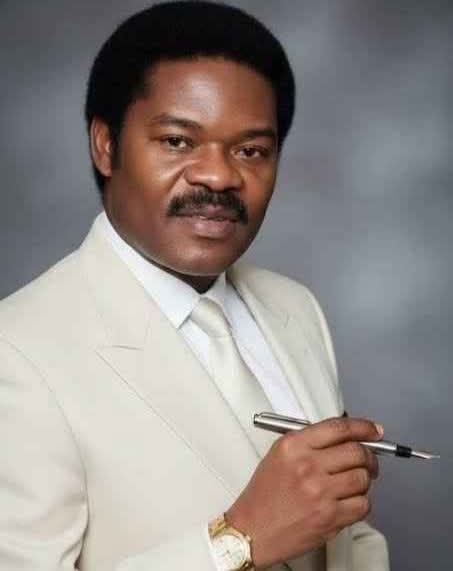
_March 16, 1947 – October 19, 1986_
Read also: Bought Votes, Stolen Futures
By Comrade Salihu Othman Isah
Forty years ago today, at exactly noon, Nigeria heard a sound it had never heard before. It was not the sound of a gun, nor the rumble of a coup. It was the sound of a parcel exploding on a dining table at 25, Talabi Street, off Adeniyi Jones Avenue, Ikeja, Lagos.
When the smoke cleared, Sumonu Oladele Giwa lay bleeding, his body torn open. His colleague, Kayode Soyinka, lay deafened. His 19-year-old son, Billy, who had received the parcel minutes earlier from two men on a motorcycle, stood in shock. Giwa was rushed to First Foundation Hospital, but he knew. His last words, whispered to those who carried him, have become an epitaph for Nigerian journalism itself: _”They got me.”_
He was 39 years old. Today, October 19, 2026, makes it exactly four decades since that Sunday. Four decades without an answer. Four decades without a conviction. Four decades since Nigeria learned that a journalist could be killed by mail.
*The Boy From Ife*
To understand Dele Giwa, you must start not in Lagos newsrooms, but in the palace of the Ooni of Ife.
Born on March 16, 1947, into a poor family working for Oba Adesoji Aderemi, Giwa knew poverty early. He attended Local Authority Modern School, Lagere, Ile-Ife. When his father moved to Oduduwa College as a laundry man, the young Dele gained admission there, washing clothes in the morning, reading Shakespeare at night.
That hunger for knowledge took him across the Atlantic. He earned a BA in English and Communication Arts from Brooklyn College, New York, in 1977, then a Master’s at Fordham University. For four years, he worked as a news assistant at The New York Times making him the first Black staffer to work on the paper’s metro desk. He could have stayed. America offered citizenship, comfort, and safety.
He chose to come home.
He returned to Nigeria in the late 70s to join the Daily Times, then became Features Editor of the Sunday Concord. But he was restless. He saw a press that reported government handouts and called it news. He wanted something bolder, something American in its depth but Nigerian in its soul.
*The Newswatch Revolution*
In 1984, with three friends — Ray Ekpu, Dan Agbese, and Yakubu Mohammed, all stars of the Concord stable, he pooled his savings and founded Newswatch magazine.
The first edition hit the streets on January 28, 1985. It was unlike anything Nigeria had ever seen. Bold, investigative, irreverent, beautifully written. It introduced fact-checking, bylines, colour photographs, and the idea that power must be held accountable in paragraphs, not press releases.
Newswatch told Nigerians that Admiral Augustus Aikhomu was richer than the state. That the government was planning to try Obasanjo for a coup. That Nigeria was importing arms with religious fanatics. It changed the format of print journalism forever. As the Columbia Journalism Review noted in 1989, Newswatch “changed the format of print journalism in Nigeria and introduced bold, investigative formats to news reporting.”
Read also: RETROSPECT: See What ‘Builder Dikko Radda’ Has Done Again
For a military regime led by General Ibrahim Babangida, a regime that called itself liberal but acted otherwise; this was dangerous.
In the week before his death, Giwa was summoned twice by the State Security Service. On October 16 and 17, 1986, he was interrogated by Lt. Col. A.K. Togun and Col. Halilu Akilu at the SSS headquarters. Officially, it was about a story on a new Second-Tier Foreign Exchange Market (SFEM) and another story titled “Power Games: Ukiwe Loses Out”. This story was about a rift between Babangida and his deputy, Commodore Ebitu Ukiwe. Unofficially, they accused Newswatch of planning to publish a story that Gloria Okon, a woman arrested for drug trafficking who was said to have died in detention, was still alive and was being sponsored by the First Lady, Maryam Babangida.
His colleagues at Newswatch would later say no such story was ever planned. Yakubu Mohammed, in 2025, reiterated that Giwa was not working on any Gloria Okon story.
But the summons had been made. The warning had been given.
On Friday, October 17, a senior official called Giwa’s wife, Funmi, to ask for directions to his house. On Saturday, October 18, Kayode Soyinka was also invited by the SSS. On Sunday morning, October 19, at 11:30 am, two men delivered a parcel marked “From the office of the C-in-C” and marked “Confidential” and “Secret.” It was addressed to Chief Dele Giwa.
He opened it. Ever since, it has been forty years without justice. The Babangida government denied involvement. It set up a police investigation. In February 1987, following a petition by Chief Gani Fawehinmi, Akilu and Togun were charged with murder. A year later, in March 1988, Director of Public Prosecutions, Mrs. Modupe Owolabi issued a nolle prosequi, and Justice Longe dismissed the case for lack of evidence.
When democracy returned in 1999, the Oputa Panel heard testimonies. Fawehinmi re-presented his case. The panel heard allegations but made no judicial findings. The file remains open, but dusty.
Today, on the 40th anniversary, the International Press Centre (IPC) said in a statement: “Forty years without justice is far too long. Silence cannot substitute for accountability. The murder of Dele Giwa must not be allowed to fade into history as an unsolved crime.” The Media Rights Agenda (MRA) and Committee to Protect Journalists (CPJ) have echoed that call.
But in truth, Dele Giwa got something bigger than a conviction. He got immortality.
Every time a young journalist in Kano, Abuja, Port Harcourt or Lagos asks a tough question; every time Newswatch, Premium Times, Daily Nigerian or SolaceBase and Prime Times refuses to publish a government press release as news; every time a reporter says “I will publish, despite the summons” — Dele Giwa lives.
He showed us that journalism in Nigeria is not a job. It is a calling that can kill you. That truth has a price. That a pen can be more dangerous than a gun, which is why they try to bomb the pen.
He left behind five children, including Billy who received the bomb, and his wife Funmi. He left behind Florence Ita Giwa, his former wife who became a Senator. He left behind a newsroom that still weeps when his name is mentioned.
He also left behind a lesson: You can kill a journalist, but you cannot kill journalism.
In his office at Newswatch, he had a plaque that read: “A journalist must not only inform, he must reform.” For 39 years, he lived that motto. For 40 years after his death, Nigeria has been trying to live up to it.
Read also: *40 YEARS AFTER DELE GIWA’s ASSASSINATION; IPC DEMANDS ANSWERS, ACCOUNTABILITY AND JUSTICE*
As we mark this anniversary in an age of Facebook shares and WhatsApp broadcasts, of clean cookstoves and CNG buses, of PRP Facebook posts and presidential campaigns, we must remember that the freedom to share news today — even the news you share daily was paid for with blood on Talabi Street.
Rest on, Dele Giwa. The parcel exploded. But the story never died.