


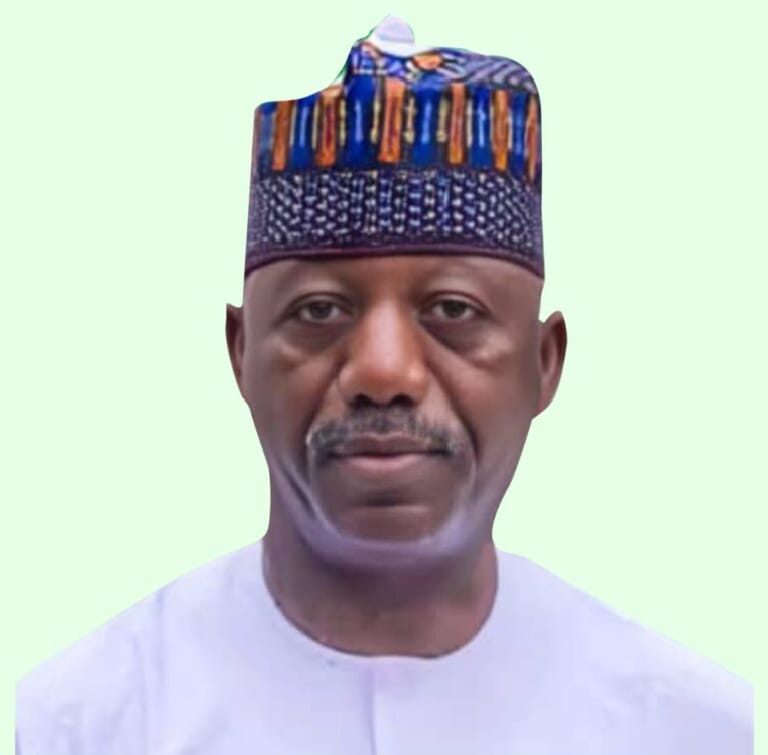
By Aminu Garko
The President, Kano Chamber of Commerce, Industry, Mines and Agriculture (KACCIMA), Amb. Usman Hassan Darma, has faulted the Federal Government for allocating all four newly approved ports to the southern part of the country.
Darma spoke to journalists on Sunday on the sidelines of the ongoing Kano International Trade Fair, themed “Industrialisation”.
He said the decision left northern importers and exporters to continue facing serious difficulties in clearing their goods, as they depend solely on facilities in Lagos and Ogun States.
“While the Government has given go-ahead for the creation of four more ports, they still gave Lagos two, Ogun one, and South-East one in Onitsha, while the entire North is kept lagging behind,” he said.
He said the allocation raised questions about fairness in the distribution of national infrastructure and stressed the need for balanced development across the country.
On the Baro Port in Niger State, Darma said the project had attained between 80 and 90 per cent completion before the end of the administration of former President Muhammadu Buhari.
He urged northern lawmakers and other stakeholders to mount pressure on the Federal Government to complete the project to enable goods to be moved by waterways from southern Nigeria to Baro.
He said completion of the facility would reduce the cost of moving goods and improve trade opportunities for businesses in northern Nigeria.
Darma maintained that the Federal Government belonged to all Nigerians and should ensure equitable distribution of infrastructure and economic opportunities.
He expressed concern over the delay in completing the Baro Inland Dry Port, noting that the operational challenges facing importers and exporters in the North could be reduced if facilities available in Lagos and Ogun States were extended to Kano and other parts of the North.
On the Dala Inland Dry Port in Kano, he said although it had been operational for about two years, the volume of transactions and facilities available remained inadequate compared with those at the seaports.
He said goods coming from outside the country could take at least two to three weeks to reach the dry port, while exporters also faced additional delays due to the absence of adequate inspection facilities for exportable products.
Darma questioned why some federal government agencies and facilities in Lagos and Ogun States could not be established in Kano or neighbouring states to facilitate trade and reduce transportation costs.
He called for the development of inland waterways and other maritime infrastructure in northern Nigeria, identifying Baro in Niger State, areas in Adamawa and parts of Kwara State as locations with potential for such projects.
He also urged the Kano State Government to address infrastructure and business challenges affecting industries, warning that failure to do so could weaken Kano’s position as a major commercial and industrial hub in Nigeria.
Darma stressed the need to engage young people in productive activities, noting that meaningful employment and economic opportunities could help reduce crime and other social vices.
On electricity, he said Nigeria had considerable opportunities to improve power generation, particularly through the utilisation of existing dams and other energy resources.
He called for stronger collaboration between federal and state governments and private investors to harness the available resources and address the electricity challenges confronting businesses.
“Private sector and international investors are willing to invest in the power sector, but require appropriate policies and an enabling environment,” he said.
He warned that inadequate electricity supply remained a major challenge to industrial growth, adding that affordable and reliable energy was essential for businesses to remain competitive.
Darma expressed concern over the decline of industries in Kano, recalling that the state previously had close to 2,000 factories, many of which were no longer operational due to inadequate electricity, high operating costs and insufficient infrastructure.
He warned that the implementation of the African Continental Free Trade Area (AfCFTA) would increase competition among African economies, making it necessary for Kano industries to improve their productive capacity.
“Without urgent interventions, Kano risks becoming a dumping ground for goods produced elsewhere, rather than maintaining its position as a major manufacturing and commercial centre,” he said.