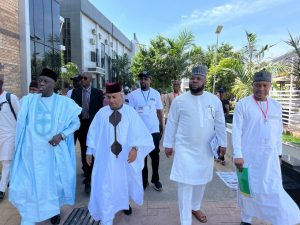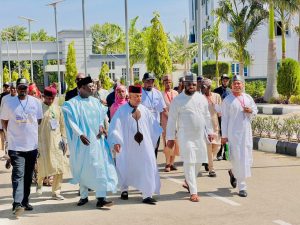

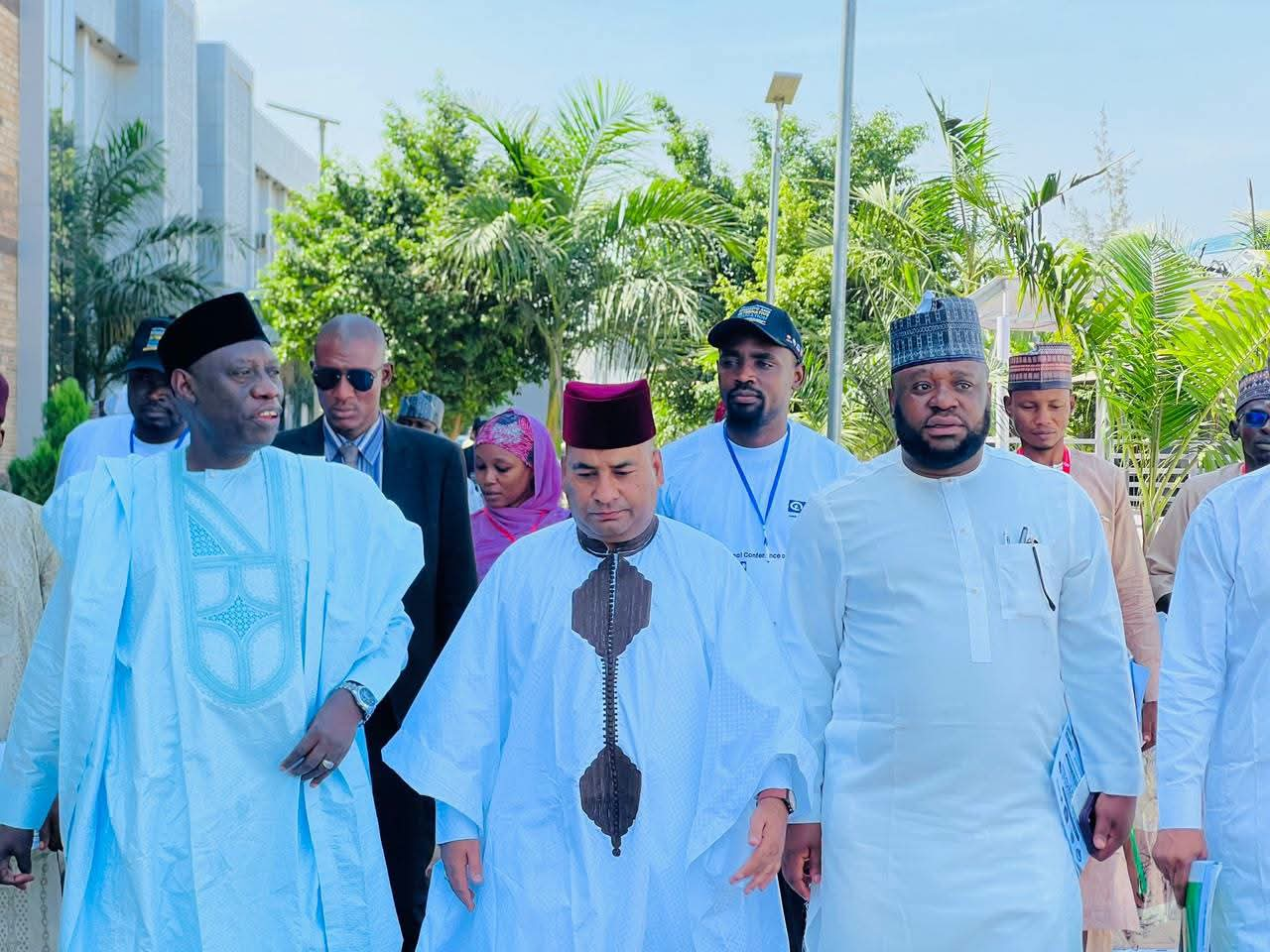
The Vice-Chancellor of the Federal University of Education, Zaria, Prof. Yahaya Isa Bunkure, has represented the Minister of State for Education, Prof. Suwaiba Sa’id-Ahmad, at the International Conference on Nomadic and Alternative Education Approaches in Africa, held at Maryam Abacha American University of Nigeria (MAAUN), Kano.
A statement signed by Sani Lawal Maqarphy Media Aide to the VC said Prof. Bunkure delivered the Minister’s keynote address at the three-day conference, which commenced on Tuesday, 3rd November 2026, with the theme, “Strengthening Inclusive and Flexible Education Pathways for Nomadic Pastoralists and Marginalised Learners in Africa.”
Read also: Zulum Orders Special Allowances for Teachers in Hard-to-Reach Communities
In the address, the Minister called for stronger policies, innovative learning approaches and institutional partnerships to ensure that children in nomadic and underserved communities have access to quality education.
She noted that conventional schooling systems must be adapted to accommodate the peculiar circumstances of children from pastoralist communities, migrant families, fishing settlements, riverine areas and remote rural communities.
Identifying mobility, poverty, long distances to schools, inadequate infrastructure, shortage of trained teachers, language barriers, insecurity and household responsibilities as major obstacles, the Minister stressed that the challenge extends beyond enrolling children in schools to ensuring their retention, completion of learning programmes and acquisition of relevant skills.
To address these challenges, she advocated alternative education approaches, including mobile schools, flexible community learning centres, non-formal education programmes, accelerated learning, educational radio and digital learning.
Prof. Sa’id-Ahmad also emphasised the importance of reliable and disaggregated education data to identify underserved children and ensure that government interventions reach those who need them most. She called for stronger coordination among the three tiers of government, education agencies, traditional institutions, community leaders and development partners.
On the application of technology, the Minister advocated the use of offline digital learning resources, solar-powered learning devices, educational radio and mobile learning applications to expand access to education. She, however, stressed that such interventions must be supported by electricity, connectivity, appropriate devices, trained teachers and community participation.
Read also: Education Must Align With 21st-Century Workplace Demands – Sanusi
The Minister further called for improved teacher preparation in multigrade teaching, inclusive education, multilingual instruction, learner-centred approaches and educational technology, noting that teachers must be equipped with the skills required to deliver education effectively in diverse learning environments.
She urged stakeholders to give special attention to girls, children with disabilities and learners affected by displacement, insecurity and migration, observing that issues such as poverty, household responsibilities, safety concerns and inadequate learning facilities continue to affect their educational opportunities.
On sustainable financing, Prof. Sa’id-Ahmad urged federal, state and local governments to make adequate budgetary provisions for nomadic and alternative education, stressing that the sustainability of interventions depends on long-term funding, trained teachers, instructional materials and effective maintenance.
She also called on universities across Nigeria and Africa to intensify research, innovation, professional development and community engagement towards addressing the challenges of educational access, participation, retention and learning among nomadic and marginalised children.
The Minister challenged participants to translate the conference deliberations into practical recommendations and an action framework identifying priority interventions, responsible institutions, implementation timelines and measurable outcomes.
She reaffirmed the Federal Ministry of Education’s commitment to working with state governments, local authorities, communities and development partners to improve access to education and learning outcomes, in line with the Education for Renewed Hope Blueprint and the Nigeria Education Sector Renewal Initiative.
Read also: Prof Aliyu Rafindadi Sanusi will serve for another two years as ABU Deputy Vice-Chancellor
The conference brought together policymakers, academics, education practitioners and other stakeholders to deliberate on inclusive and flexible educational pathways for underserved communities across Africa.
It was organised by MAAUN in collaboration with the Catholic University of East Africa, Kenya; Capital University, Somalia; and the University of Namibia.