


By Adamu Aminu.
Politics in Kano has never been short of drama, but the latest chapter reads like a play where the apprentice dares the master under the full glare of daylight.
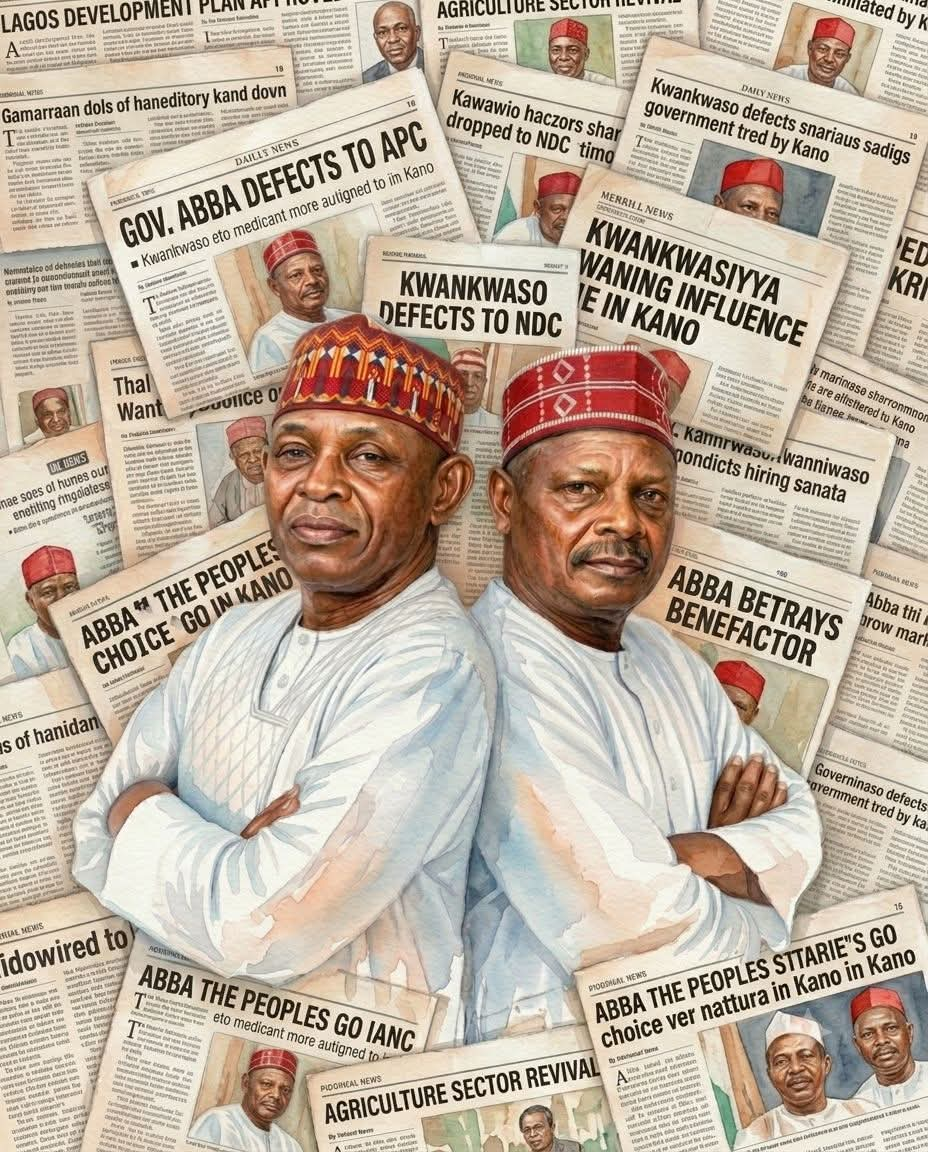
Governor Abba Kabir Yusuf, once the loyal godson of Senator Rabiu Musa Kwankwaso, has now stepped out of the shadows, warning his benefactor against what he described as “frequent attacks.”
The words were plain, the tone unmistakable: silence should not be mistaken for fear.
The confrontation is more than a quarrel between two men; it is a parable of Nigerian politics.
Benefactors often elevate protégés to power, only to discover that wings once nurtured can fly in unexpected directions. Governor Abba Yusuf’s defection to the APC was not just a political move; it was a declaration of independence.
Senator Rabiu Musa Kwankwaso, still feeling the effects of that defection, now finds himself grappling with diminished influence in a state he once commanded with ease.
Governor Abba Kabir Yusuf’s remarks in Rano carried the weight of a no-regret stance. He reminded his audience that peace in Kano remains his priority, but he would not hesitate to respond if provoked further.
The distancing language was deliberate: reconciliation may be desirable, but submission is not on the table. In plain terms, the governor signaled that the era of tutelage is over.
Senator Kwankwaso, a two-time governor, Minister and former presidential candidate, is no stranger to political storms. His grassroots machinery, built over decades, remains formidable. Yet the reality is stark: influence without office can feel oppressive when confronted by the authority of incumbency.
Read also: Gombe Is APC, and APC Is Gombe
Governor Yusuf’s control of the state machinery gives him leverage, while Kwankwaso’s legacy now faces the test of relevance.
The clash illustrates a broader truth about Nigerian politics—movements built around personalities often fracture when ambition collides with loyalty.
The Kwankwasiyya brand, once a symbol of unity, now risks becoming a theatre of division. For Kano, the stakes are high; political feuds at the top can ripple down to the grassroots and unsettle the fragile balance of governance.
Neutral observers note that both men risk alienating their bases if the feud deepens. Kwankwaso’s supporters may view Yusuf’s independence as betrayal, while Yusuf’s allies see his defection as pragmatism.
The people, caught in the middle, deserve sincerity rather than platitudes. In the end, the question is not who shouts louder, but who governs better.
Governor Abba Gida Gida’s words were not just a rebuttal; they were a statement of intent. Silence is not fear, independence is not betrayal, and reconciliation without respect is a fragile truce.
As time passes, the effects of the fallout remain clear. Senator Rabiu Musa Kwankwaso has become increasingly vocal, while Governor Abba Kabir Yusuf remains reserved and resistant. The spectacle is less a dialogue than a duel, played out in public view with words as weapons and silence as a shield.
Senator Kwankwaso, once the towering benefactor, now voices criticism more sharply, his rhetoric shaped by the sting of Abba’s defection. Governor Yusuf, the protégé turned governor, meets that criticism with measured resistance, refusing to bend under the weight of his mentor’s rebukes.
The clash is not merely personal; it reflects Kano’s political theatre, where loyalty and ambition wrestle for dominance, and where silence itself can speak louder than words. In this unfolding drama, one man speaks often, the other speaks little, and the people are left to judge which posture carries greater truth.
Read also: GOMBE STATE IN FOCUS: We Have Reasons to Vote APC in Gombe State
Kano’s political theatre has entered another act, and the audience, the people, will judge whether the script delivers truth or merely rehearses old rivalries.
Adamu Aminu writes from Kano.