


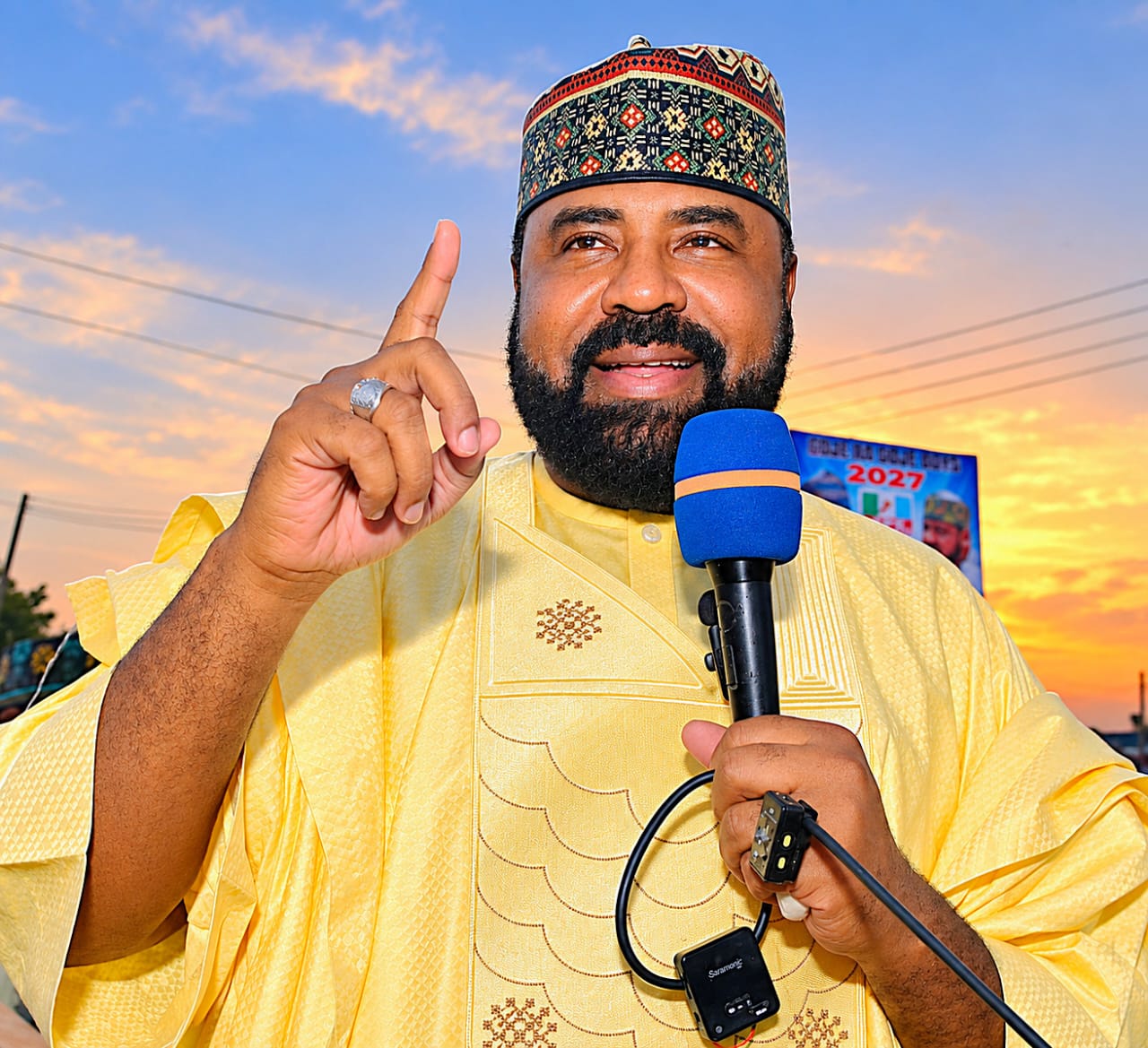
Ibrahim Sani Shawai.
In every society, leadership is often measured by visible achievements — roads constructed, buildings commissioned, institutions created and public offices occupied. These are important indicators of service, but they do not always tell the full story of a leader’s impact.
The truest and most enduring legacy of leadership lies in people: the men and women whose lives have been transformed, whose talents have been nurtured and whose opportunities have been expanded to enable them contribute meaningfully to society.
This is where the record of Dr Jamil Isyaku Gwamna, the All Progressives Congress (APC) governorship candidate in Gombe State, presents a compelling example of leadership built on human capital development.
For more than two decades, Dr Gwamna has consistently demonstrated a strong belief that the greatest investment in any society is investing in people. His philosophy has remained simple but profound: Empower individuals, create opportunities, develop skills and build institutions that would outlive generations.
One of the clearest examples of this approach was demonstrated during his years of leadership in the power sector industry, particularly at Kano Electricity Distribution Company (KEDCO). Under his watch and through his interventions, over 1,500 indigenes of Gombe State were offered employment across KEDCO and Kaduna Electricity Distribution Company (KAEDCO).
This achievement goes beyond mere statistics. Behind every employment opportunity is a story of hope restored, a family supported and a future secured.
Among these beneficiaries are engineers, technicians, accountants, administrators, managers, customer service professionals and other skilled workers who today contribute significantly to Nigeria’s electricity industry.
They work daily to ensure that homes receive power, businesses remain operational and industries continue production. Their contributions, support economic activities across Kano, Jigawa, Katsina, Kaduna and Gombe States.
In many ways, these professionals have become ambassadors of Gombe State beyond its borders.
They carry with them not only their expertise but also the values, resilience and talents of the people of Gombe. Through their services, they are demonstrating that Gombe possesses abundant human resources capable of contributing to national development.
Part of their earnings returns home to Gombe, supporting families, funding education, building houses, sustaining local businesses and contributing to social obligations such as weddings, community development projects and other collective responsibilities.
This is the powerful multiplier effect of human capital development.
When one person is empowered, an entire household can benefit.
When a professional is developed, institutions become stronger.
When families become economically stable, communities become more resilient.
And when communities prosper, states and nations advance.This principle has remained at the heart of Dr Gwamna’s interventions over the years.
Across the world, societies that have made remarkable progress are those that prioritised human capital. They invested in education, vocational skills, entrepreneurship, technology and employment opportunities.
The story of the over 1,500 Gombe indigenes employed in the power sector illustrates this reality.
Many of these individuals have acquired valuable technical experience, built professional networks and developed expertise that can contribute to future economic growth. Some may eventually return home to establish businesses, mentor younger generations and support the development of institutions in Gombe State.
Their experiences become assets not only to themselves but also to society.
This is what real leadership seeks to achieve — creating opportunities that continue yielding benefits long after the initial intervention.
As political conversations increasingly focus on development, employment and economic growth, the issue of human capital deserves greater attention. Jobs are not merely numbers; they represent dignity, stability and opportunities for progress.
A society that invests in its people is a society investing in its future.
The record of Gwamna offers an important lesson in this regard, that true legacy is not only about what a leader builds, but about the people he empowers to build society.
For generations to come, roads may require repairs, buildings may age and offices may change. But individuals whose lives have been transformed become living testimonies of leadership.
And perhaps that is the highest of legacies — building people who, in turn, build the nation.
Gombe 2027 Sai Sardauna In Sha Allah!
Ibrahim Sani Shawai
Spokesperson to Dr Jamil Isyaku Gwamna.
September, 17 2026