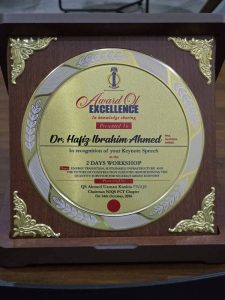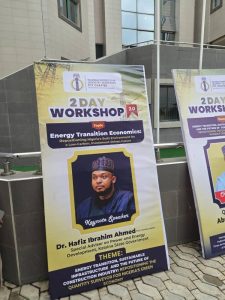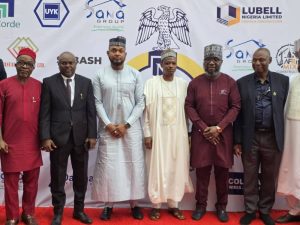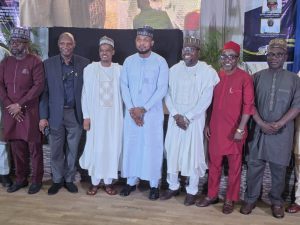

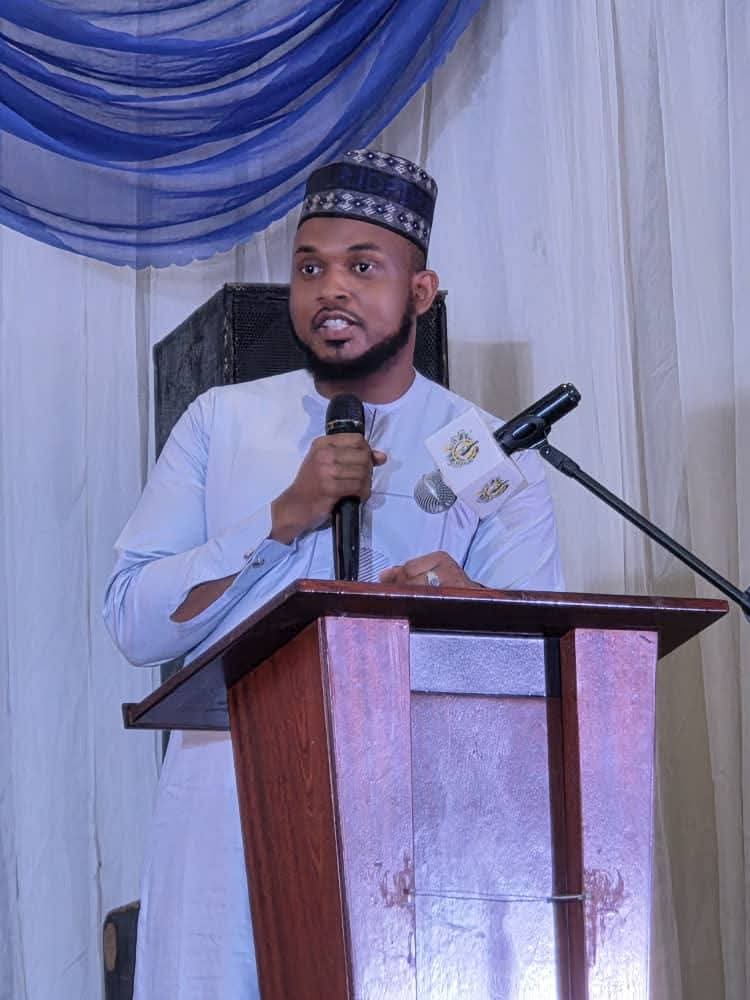
The Special Adviser to the Katsina State Governor on Power and Energy, Dr. Hafiz Ibrahim Ahmed, has delivered a keynote address at a two-day workshop organised by the Nigerian Institute of Quantity Surveyors (NIQS), FCT Chapter, where he called for the strategic repositioning of Quantity Surveyors and other built-environment professionals to take a leading role in Nigeria’s transition to a sustainable, low-carbon and energy-secure economy.
The workshop, themed “Energy Transition, Sustainable Infrastructure and the Future of the Construction Industry: Repositioning the Quantity Surveyor for Nigeria’s Green Economy,” brought together professionals and stakeholders to examine the evolving role of the construction industry in supporting Nigeria’s energy transition and sustainable development agenda.
Read also: Governor Radda Swears In Three Special Advisers
Dr. Hafiz challenged Quantity Surveyors to move beyond their traditional role as cost managers and become strategic managers of value, sustainability, investment and whole-life infrastructure economics.
He noted that the rapid transformation of the global energy and infrastructure landscape requires professionals who understand not only the cost of constructing projects, but also their long-term economic, environmental and social value.
“The Quantity Surveyor must move beyond the traditional measurement of cost to become a strategic manager of value. In the emerging green economy, professionals must understand lifecycle costing, energy efficiency, renewable energy, climate resilience, carbon reduction and the financial implications of sustainable infrastructure,” he said.
Dr. Hafiz emphasised that Nigeria’s energy transition presents significant opportunities for the construction industry, particularly in solar photovoltaic systems, battery energy storage, mini-grids, electric mobility infrastructure, green buildings, transmission and distribution infrastructure, and other climate-smart investments.
He explained that Quantity Surveyors have a critical role to play in ensuring that such investments deliver value for money throughout their entire lifecycle, from conceptualisation and procurement through construction, operation and maintenance to eventual decommissioning.
“When we invest in energy infrastructure, we are not simply constructing physical assets. We are building the foundation for economic productivity, industrialisation, improved public services and sustainable development. The professionals responsible for determining and managing the value of those investments must therefore understand the bigger picture,” he added.
The Katsina State Energy Adviser used the occasion to commend the Governor, Malam Dikko Umaru Radda, for what he described as transformative leadership in the power and energy sector, particularly the administration’s deliberate efforts to reposition energy as strategic infrastructure for economic growth and public-sector transformation.
Dr. Hafiz said the Governor’s vision had resulted in a more coordinated approach to power and energy development, with emphasis on renewable energy, energy efficiency, infrastructure investment, climate resilience and long-term energy security.
Read also: Governor Radda Receives Sandamu Stakeholders, Appreciates Their Support and Cooperation
He noted that Katsina State’s expanding renewable-energy portfolio demonstrates how strategic investment in the sector can simultaneously reduce public-sector energy costs, improve the reliability of essential public services, strengthen resilience and create new opportunities for economic development.
He further highlighted Katsina State’s emergence as Nigeria’s number-one state in the latest Subnational Climate Governance Performance Rating and Ranking (SCGPRR 3.0) as a significant recognition of the direction of the administration’s climate and sustainable-development agenda. The latest assessment, conducted by the Society for Planet and Prosperity in collaboration with the Federal Ministry of Environment, evaluated states on climate governance, policy implementation, institutional arrangements, financing, project delivery, monitoring, transparency and visibility of climate action.
According to Dr. Hafiz, Katsina’s deliberate deployment of renewable-energy infrastructure, alongside its broader climate policies and interventions, is an important component of the State’s progress in building a resilient and sustainable development model.
“Our governor has demonstrated that power and energy must be treated not simply as a recurring expenditure, but as strategic infrastructure for economic transformation. His administration has taken deliberate steps to build an energy system that supports development, strengthens public institutions and positions Katsina for the future.”
“Katsina’s emergence as the number-one state in Nigeria in the latest climate governance ranking is a strong recognition of the broader direction of the administration. Our deliberate deployment of renewable energy, alongside climate governance, sustainable infrastructure and other interventions, demonstrates that climate action can be integrated into the economic and development priorities of a state,” he added.
Dr. Hafiz said Katsina State would continue to expand its renewable-energy portfolio through solar power, battery energy storage, wind-energy development and hydropower initiatives, while pursuing policies and partnerships designed to attract investment, strengthen energy security and accelerate sustainable economic development.
He urged the NIQS and other professional institutions to embrace emerging competencies in green finance, climate-resilient infrastructure, renewable-energy economics, carbon markets, lifecycle assessment, sustainable procurement and other areas shaping the future of the built environment.
He stressed that the professionals who would remain most relevant in the coming decades would be those capable of combining technical expertise with a strong understanding of sustainability, finance, technology, climate risk and public policy.
“The future belongs to professionals who can connect cost with value, infrastructure with sustainability, and investment with measurable impact. Nigeria’s green transition requires a new generation of professionals who are prepared not merely to participate in this transformation, but to lead it,” Dr. Hafiz stated.
Read also: Governor Radda Bags 2026 GovTech Public Service Award, Dedicates Honour to Katsina People
He called for stronger collaboration among government, professional institutions, academia, development partners and the private sector to develop the skills, standards, investment frameworks and institutional capacity required to accelerate Nigeria’s transition to a green and sustainable economy.
Dr. Hafiz concluded by urging Quantity Surveyors to see the green economy not as a distant possibility, but as an emerging economic reality that requires their immediate professional engagement, innovation and leadership.