


By Ibrahim A Jombali
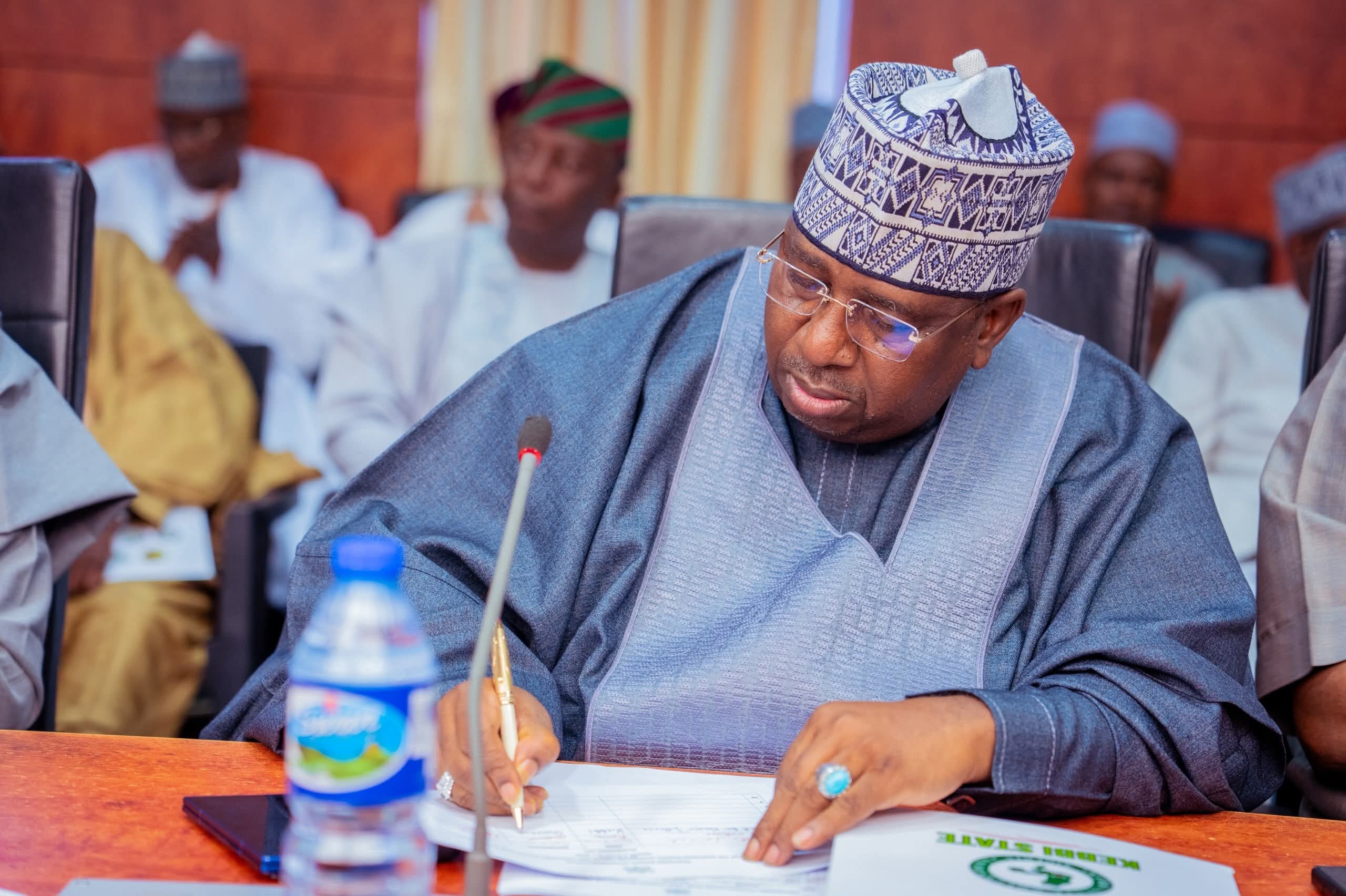
In every society, there are voices whose words carry more weight than applause. They are the voices of history, tradition, and moral authority. When such voices speak on leadership, their verdict often transcends politics and enters the realm of enduring public judgment. This was the significance of the recent remarks by the Emir of Gwandu on the administration of Kebbi State Governor, Dr. Nasir Idris, Kauran Gwandu.
The Emir’s well-informed judgement was not a routine expression of royal courtesy. Rather, it was a reflection on character—the one attribute that often determines whether power becomes a burden or a blessing. According to the revered monarch, Governor Nasir Idris did not suddenly acquire humility, discipline, or reverence for elders upon assuming office. These virtues had long defined his public and personal life, making leadership a natural progression rather than an accidental privilege.
That concrete observation deserves careful reflection. Nigeria’s democratic experience has repeatedly shown that leadership anchored on values tends to outlive political rhetoric. Institutions may confer authority, but only character earns trust. In acknowledging the governor’s longstanding and genuine respect for traditional institutions and his modest disposition, the Emir highlighted an often overlooked ingredient of good governance: the ability to exercise power without losing the humility that inspires confidence.kaura in the Emir’s humble opinion has brought undertang, simplicity, honour, and integrity to leadership.
Perhaps more compelling was the Emir’s assessment of the administration’s development trajectory. Across Kebbi State, infrastructure renewal has become one of the most visible signatures of the present government. Roads, public facilities, and other critical projects are gradually redefining the physical landscape of the state. More importantly, they are restoring public confidence that the government can indeed serve as an instrument of progress rather than merely an arena for political contests.
The royal father’s advice that Governor Idris should remain focused despite criticism and antagonism also resonates beyond Kebbi. Democratic governance naturally attracts scrutiny, and criticism remains an indispensable component of accountability. Yet history also teaches that transformational leaders often confront resistance while implementing difficult but necessary reforms. What ultimately matters is whether public policies improve the lives of citizens and whether governance remains faithful to the common good.
The Emir’s reminder that honesty, integrity, accountability, and the fear of God remain the pillars of enduring leadership was equally profound. These are not ceremonial virtues reserved for speeches; they are practical principles that distinguish administrations remembered for service from those forgotten after the headlines fade. Public office, after all, is temporary. Legacy is permanent.
It was therefore fitting that the Commissioner for Information, Alhaji Yakubu Ahmad BK, who led the state government’s delegation to the palace, acknowledged the Emir’s fatherly guidance and consistent support. The relationship between responsible governments and respected traditional institutions should never be reduced to protocol. It is an important partnership that strengthens social cohesion, encourages constructive dialogue, and promotes stability in a rapidly changing society.
The administration has also continued to point to measurable interventions across key sectors. Educational reforms aimed at repositioning learning, sustained investments in agriculture to enhance food production and rural livelihoods, renewed attention to healthcare delivery, and continued efforts to strengthen security have all featured prominently in the government’s development agenda. Whether through infrastructure or social investment, the objective appears to be the gradual rebuilding of public confidence in governance.
Under the very conscious Governor Nasir, Kebbi State is steadily and surely crafting a narrative that seeks to replace unrealised potential with measurable progress. The conversation is increasingly shifting from promises to performance, from political slogans to developmental outcomes. While no administration is beyond criticism or improvement, the broader direction of governance has attracted growing recognition from stakeholders whose opinions command considerable respect.
Ultimately, the Emir of Gwandu’s remarks represent more than an endorsement of an individual. They underscore a timeless principle: that leadership grounded in integrity, humility, and service earns validation not only through electoral victories but through the confidence of the people ( who are owners of the mandate)and the respect of society’s moral custodians
As Kebbi continues on its development journey, the convergence of visionary governance and responsible traditional leadership offers a reassuring model. Where wisdom reinforces purposeful leadership, progress is not merely anticipated—it becomes a realistic expectation. And in that convergence lies perhaps the strongest assurance that Kebbi’s journey of transformation is only just beginning.
It takes a lot of courage, discipline, tact, intelligence, commitment, honesty, openness, accessibility and tolerance to drive society to the path of development, and Governor Nasir Idris in the judgement of community leaders, the traditional institution and majority of the citizens has a lot of them in huge supply. With him, Kebbi state is set to become a reference point in greatness and progress.
Ibrahim Abubakar Jombali ,Special Adviser on Public Enlightenment and Orientation to the Kebbi State Governor