


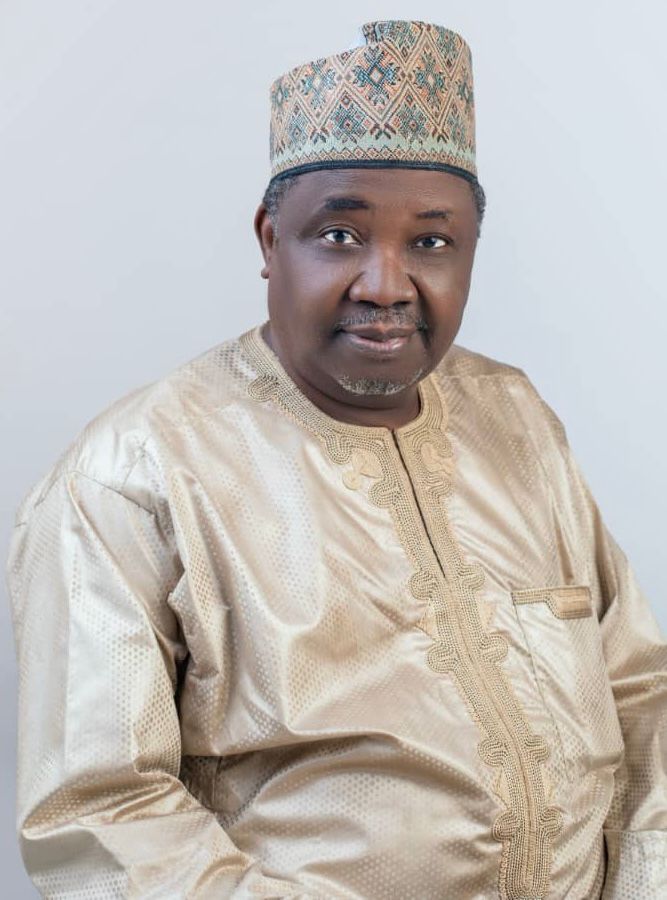
By Aminu Garko
The Vice-Chancellor, Federal University of Education, Kontagora, Prof. Faruk Rashid-Haruna, says the emphasis on medals, prestige and financial reward has encouraged a “win-at-all-costs” culture threatening collegiate and global sports.
Rashid-Haruna stated this on Thursday in Kano in his keynote address at the 54th National Conference and Workshop of the Nigeria Association for Physical, Health Education, Recreation, Sports and Dance, NAPHER-SD.
The conference, held at Bayero University from Sept. 15 to Sept. 19, has as its theme: “Transparency, Integrity and Accountability in Sports, Health and Education”.
The keynote is titled: “Legal, Ethical and Governance Considerations in Global and Collegiate Sports: Addressing Systemic Crises and Institutional Corruption”.
The vice-chancellor said sport, physical education, health education, recreation and dance were institutional and social spaces through which individuals learn cooperation, discipline, leadership, citizenship and respect for others.
He said their legitimacy depends on public confidence that decisions are made transparently, resources are managed responsibly, participants are protected from harm and rules are applied fairly.
He said the paper examined legal, ethical and governance challenges confronting global and collegiate sports, with particular attention to Nigerian university sport.
He argued that contemporary emphasis on medals, institutional prestige, commercial visibility and financial reward produces doping, manipulation of eligibility, match-fixing, bribery, violence, harassment and unsafe participation.
“These problems are failures of transparency, integrity and accountability with consequences for athlete health, educational values, institutional reputation and public trust,” he said.
Rashid-Haruna noted that university competitions such as the Nigerian University Games Association, NUGA, founded in 1966, were established within the tradition of social interaction, youth development and peaceful competition.
He said in such an environment, the legitimate desire to excel could develop into a destructive culture when athletes, coaches and administrators believed success was more important than the manner in which it was achieved.
He therefore proposed an integrated governance framework centred on transparent financial administration, independent oversight, verified athlete accreditation, safeguarding systems, health and safety protocols, ethical education, protected reporting channels and measurable integrity indicators.
He recommended that the government should develop a coherent national integrity framework that connects anti-corruption, athlete welfare, safeguarding, health and education, and provide predictable funding for university sports.
He also recommended that universities should treat sport as part of their educational mission and evaluate programmes using participation, learning, health and integrity outcomes, not medal counts alone.
He further recommended that NUGA should introduce a harmonised eligibility and biometric accreditation system, while professionals should model ethical conduct that places participant welfare above competitive success.
“In conclusion, sport should reward excellence, but excellence must include honesty, safety, fairness and responsibility,” he said.