
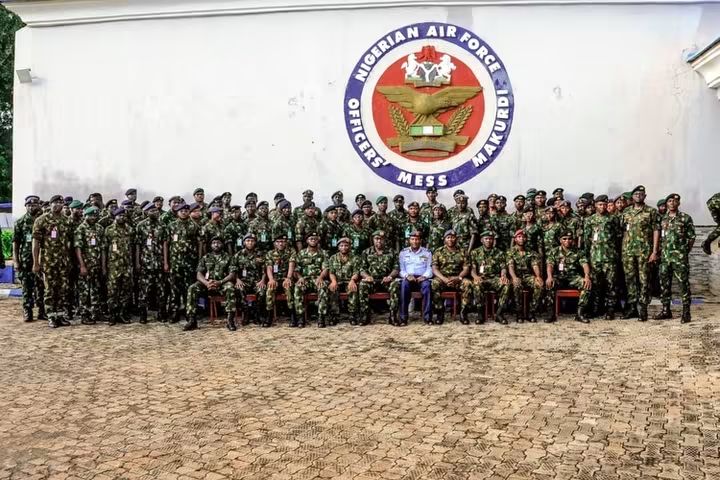
Students of Junior Course 102 of the Armed Forces Command and Staff College (AFCSC), Jaji, embarked on a study tour to the Nigerian Army School of Military Engineering (NASME) and Headquarters Tactical Air Command (TAC), Nigerian Air Force, Makurdi, Benue State, from 12 to 14 August 2026, as part of their Military training package.
A statement signed by Major Emmanuel Onoja Public Relations Officer Armed Forces Command and Staff College, Jaji, Nigeria said the tour was aimed at consolidating the students’ theoretical knowledge of the organisation, roles, capabilities and equipment of the Nigerian Army and Nigerian Air Force, with particular emphasis on military engineering and tactical air operations. The programme featured professional briefs, static equipment displays, practical demonstrations and aerial displays.
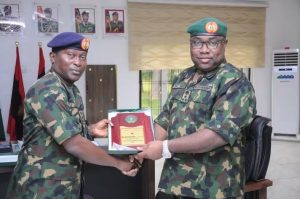
It said in a bid to broaden the students’ understanding of military engineering capabilities and their employment in contemporary operations, the visiting team, led by the Team Leader, Director, Department of Joint Studies, AFCSC, Brigadier General MM Abu, proceeded to the Nigerian Army School of Military Engineering (NASME), where the delegation was received by the Commandant, Brigadier General SA Adeyemo.
In his welcome address, the Commandant described NASME as a premier institution responsible for developing skilled, innovative and mission-oriented military engineers through realistic and rigorous training, research and innovation. He welcomed the students and urged them to take full advantage of the visit to broaden their understanding of the organisation, capabilities and operational employment of the Nigerian Army Engineers.
The Commandant explained that military engineers remain an indispensable component of military operations, providing capabilities that enable troops to live, move and fight while denying similar advantages to the adversary. He highlighted their contributions to counter-improvised explosive device operations, route clearance, mobility support, field fortification, infrastructure development and other engineering tasks in contemporary operations.
The students subsequently received professional briefs on the organisation, roles and employment of the Nigerian Army Engineers, as well as security and counter-improvised explosive device awareness.
At the Explosive Ordinance Depot Demonstration Ground, the students witnessed practical demonstrations on the deployment and employment of Field Engineer Squadrons, including the search for improvised explosive devices along a main supply route. The demonstration showcased both manual and mechanical search techniques, including the use of the Husky 2G mine-detection vehicle.
A further demonstration featured the recovery of an improvised explosive device placed on critical infrastructure, such as a bridge, using specialised equipment including the hook-and-line kit. The students also inspected a range of engineering and EOD equipment displayed at the location, including, mine-resistant ambush-protected vehicles, the Husky 2G and other equipment employed by Nigerian Army Engineers in the field.
Read also: Kano Police Command Reiterates Ban On Durbar,Horse-Riding,Warns Against Violation
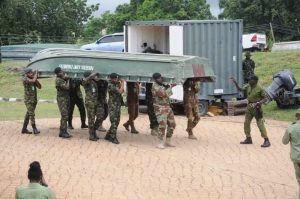
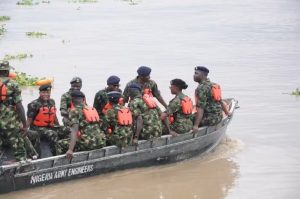
The students also witnessed a practical demonstration of river-crossing operations at the Maj Gen Efevbohkhan Waterside. The demonstration highlighted the organisation and roles of the various elements involved in river-crossing operations, including the transition from silent to noisy river crossing when operational surprise is compromised.
The students were further exposed to the deployment of the Foldable Floatable Bridge, a capability designed to facilitate the movement of personnel and logistics across water obstacles while maintaining lines of communication during operations. Selected students participated in aspects of the practical demonstration, gaining first-hand appreciation of river-crossing procedures and engineering support to manoeuvre.
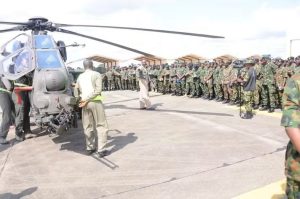
At Headquarters Tactical Air Command, the students were received on behalf of the Air Officer Commanding, Tactical Air Command, Air Vice Marshal MC Ekwueme, by the Chief of Staff, Air Commodore AH Idris.
The students received a comprehensive brief on the organisation, roles and activities of Tactical Air Command, including its responsibilities for ensuring the combat readiness of assigned air power elements and the resources required to fulfil the objectives of the Nigerian Air Force.
The brief highlighted the Command’s major tasks, operational platforms, constituent units and co-located Nigerian Air Force units in Makurdi. The students were also exposed to the role of tactical air power in counter-air operations, air support and maritime air operations, as well as its contribution to ongoing national security operations
The climax of the tour includes interactive sessions, static displays and practical demonstrations, providing the students with valuable exposure to the employment of military engineering and tactical air capabilities in contemporary operations.
Read also: POLICE WARN AGAINST DELIBERATE FALSEHOOD, MISINFORMATION AND ATTEMPTS TO UNDERMINE PUBLIC PEACE
The tour formed part of AFCSC’s continuing efforts to expose students to practical military capabilities and enhance their professional understanding of joint operations ahead of their future command and staff appointments.
Highlights of the tour included presentation of souvenirs and a group photo graph.