
Ahmadu Bello University has launched an orange plantation project designed to promote environmental sustainability, deepen students’ participation in climate action and create a potential long-term source of internally generated revenue for the university.
A statement from the Public Affairs Directorate Office of the VC said the initiative, organised by the Directorate of Advancement and International Education (DAIE), was launched at the University Farm in Zaria today (Saturday, 29th August, 2026).
Read also: JRS launches project on community leadership & Resilience in Adamawa,Borno.
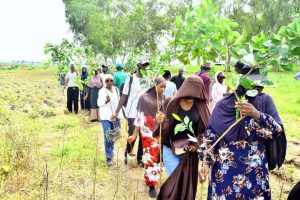
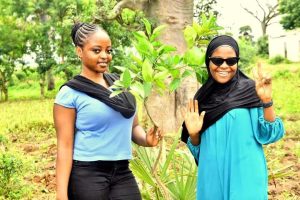
It attracted a number of participants, particularly students, members of University Management, academics and other stakeholders who took part in the planting of orange seedlings.
Welcoming participants to the event, the Director, DAIE, Prof M I Umar-Buratai, appreciated the students who voluntarily subscribed to the initiative.
He highlighted the multiple benefits of establishing the orange plantation, noting that the project was conceived not merely as a tree planting exercise but as a long term legacy project with environmental and economic value.
In his remarks, the Vice-Chancellor, Prof Adamu Ahmed, described the initiative as one that strongly aligns with his vision for the university, particularly his commitment to making ABU a student-centred institution and promoting environmental sustainability.
He was represented by the Deputy Vice-Chancellor, Advancement, Research and Innovation, Prof. Aliyu Rafindadi Sanusi.
ABU, according to him, attached considerable importance to initiatives that place students at the centre of university development while simultaneously preparing them to become responsible citizens and future leaders.
He applauded the participating students for making the personal sacrifice of contributing N3,000 each towards the project despite the prevailing economic challenges in the country.
He stressed that the plantation has been an additional dimension as a potential carbon asset, capable of contributing to the university’s environmental credentials.
According to him, the students’ contribution was significant because they were not simply planting trees; they were leaving a physical and environmental footprint that future generations of ABU students would inherit and benefit from.
“These are the kind of students ABU is proud to graduate,” he said, stressing that the initiative demonstrated that education should go beyond acquiring certificates to making meaningful contributions to society.
According to him, the students’ sacrifice would not go unnoticed, as their participation represents a practical contribution towards building a greener and more sustainable future for the university.
He said they would be issued certificates by the university in recognition of their contribution.
The Dean, Faculty of Agriculture, also commended the Directorate for initiating the project, describing it as a worthwhile investment in both environmental sustainability and agricultural development.
He disclosed that some students from the Faculty of Agriculture had volunteered to remain actively involved in managing the newly planted seedlings after the launch.
Their responsibilities would include monitoring the plants, providing appropriate care and ensuring that the seedlings are properly planted properly and developed into productive trees.
The students’ involvement, he explained, would provide a practical learning opportunity while also ensuring continuity and ownership of the project beyond the launch ceremony.
In a presentation on the environmental and economic dimensions of the initiative, Dr. Jibrin Abdullahi of the Department of Geography and Environmental Management, commended the Directorate and participating students for embarking on the project.
Dr Abdullahi explained the concept of carbon offsetting, noting that trees and other vegetation play an important role in mitigating climate change.
He said a carbon offset represents a measurable reduction, avoidance or removal of greenhouse gas emissions that can be used to compensate for emissions occurring elsewhere.
Abdullahi further talked about climate change, carbon asset and climate finance.
He also highlighted the broader economic potential of an orchard to the University.
Beyond carbon-related opportunities, an established orange plantation could generate income through the sale of fruits and, in the longer term, through value addition and processing, he said.
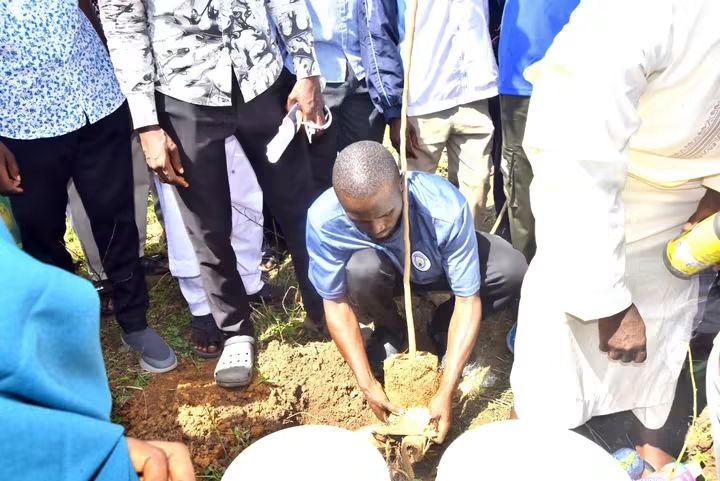
The event also featured a practical demonstration by a student of the Faculty of Agriculture, who took participants through the step-by-step process of planting citrus seedlings.
The demonstration covered key stages involved in establishing the seedlings, including selecting an appropriate planting location, preparing the planting hole, carefully removing and positioning the seedling, covering the roots with soil, firming the soil around the plant and providing adequate initial watering and care.
Read also: IGP DISU HONOURS PIONEER POLICEWOMEN, LAUNCHES BOOK ON WOMEN IN POLICING
Later, the Deputy Vice-Chancellor led University officials, staff, students and other participants in the ceremonial planting of the orange seedlings, formally marking the commencement of the 2026 Orange Plantation Legacy Project.
Also present at launch were the Assistant Director, DAIE, Dr Ahmed Zakaria; ABU Farm Manager, Mohammed Isa; Deputy Registrar, PAD, Ingino D. Voh; Communication Officer, DAIE, Hafsat Ibrahim; and Binta Ahmed Dodo, Administrative Secretary, DAIE.