
Fasanya’s 64 Years of Riding Forward
By: Ibrahim Kaula Mohammed
A saddle is not meant for rest. It is made for movement. It is the seat of a rider who has somewhere to go, someone to reach, a purpose that will not let him stop. In the life of Dr. Olawale Fasanya, the saddle has been eternal—not a temporary resting place, but his permanent home. He mounted it decades ago and has not dismounted since. At 64, he still rides. The journey continues. The destination grows further, not nearer. This is what it means to have an eternal saddle: you do not ride towards a finish line. You ride because riding is who you are.
So, I first saw Dr. Fasanya at SMEDAN in 2005. I was a young man without direction. He could have treated me like a new employee—given me a desk, handed me a job description, and sent me on my way. Instead, he received me like a father. That greeting told me everything: this man does not retire from duty. He was not clocking hours. He was living a mission. And he was offering to take me on the ride with him.
Here stood a man of real authority, yet he wore his power like a light garment—barely noticeable, never burdensome. He did not command respect through shouting or threats. People respected him because he respected them first. He listened more than he spoke. He watched more than he judged. He was quiet. And that quietness was louder than any voice I have ever heard.
Those years under his watch changed how I understood work itself. I learned that real leadership is not about managing people. It is about mentoring them. It is not about extracting effort. It is about unlocking potential. He was preparing me for a road I did not yet know I would travel.
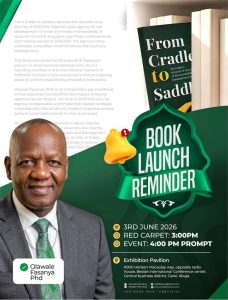
Now, as Dr. Fasanya turns 64, he mounts his saddle with a new book: “From Cradle to Saddle.” This is not a retirement memoir. This is a manual for the future. The book carries twenty years of his work building institutions that help ordinary people start enterprises and build lives. It is not a history book. It is a blueprint. Every page says: here is how I did it. Here is what I learned. Here is how you can do it too.
The truth about Dr. Fasanya that needs to be said without ambiguity is this: he does not measure his life by what he achieved for himself. He measures it by what he unlocked in others. Every person he mentored is his monument. Every business that succeeded because of his guidance is his legacy. Every young person who found direction because he believed in them is his real achievement. This is why people who have worked with him do not simply respect him. They love him. They carry him with them long after they have left his office.
The reason he can write “From Cradle to Saddle” at 64 is because he has never stopped riding. The cradle is his beginning—the place where he learned the value of hard work and honest living. The saddle is his constant—the seat from which he has given direction to countless lives. The journey from one to the other is not finished. At 64, he is still riding. The destination is not behind him. It is ahead.
This matters now because our country needs the lessons in this book. We live in an age where leaders see their positions as opportunities for personal enrichment. Where power is a ladder to climb alone. Where success is measured in what you accumulate, not in what you build in others. Dr. Fasanya’s life stands against this tide. He made us know leadership is service. That influence is trust. That power is responsibility.
As I write this tribute on the eve of his 64th birthday, I do not celebrate that he is getting older. I celebrate that he is still riding. The saddle remains eternal because the mission has not changed. There are still more entrepreneurs to support. Still more young people to guide. Still more communities where small businesses can lift families from poverty. The work is not finished. It may never be finished. And that is precisely why Dr. Fasanya will never dismount.
Happy birthday, sir. I wish you sound health, more wisdom and everlasting joy. The world keeps moving forward because you never stopped pushing it.
Ibrahim Kaula Mohammed