


By Aminu Garko
The Kano State Government has provided five new operational vehicles to the Special Task Force on Drug Abuse and Illicit Trafficking to strengthen its capacity in tackling drug-related offences across the state.
This was contained in a statement issued on Wednesday by Musa Tanko Muhammad, Press Secretary, Office of the Secretary to the State Government.
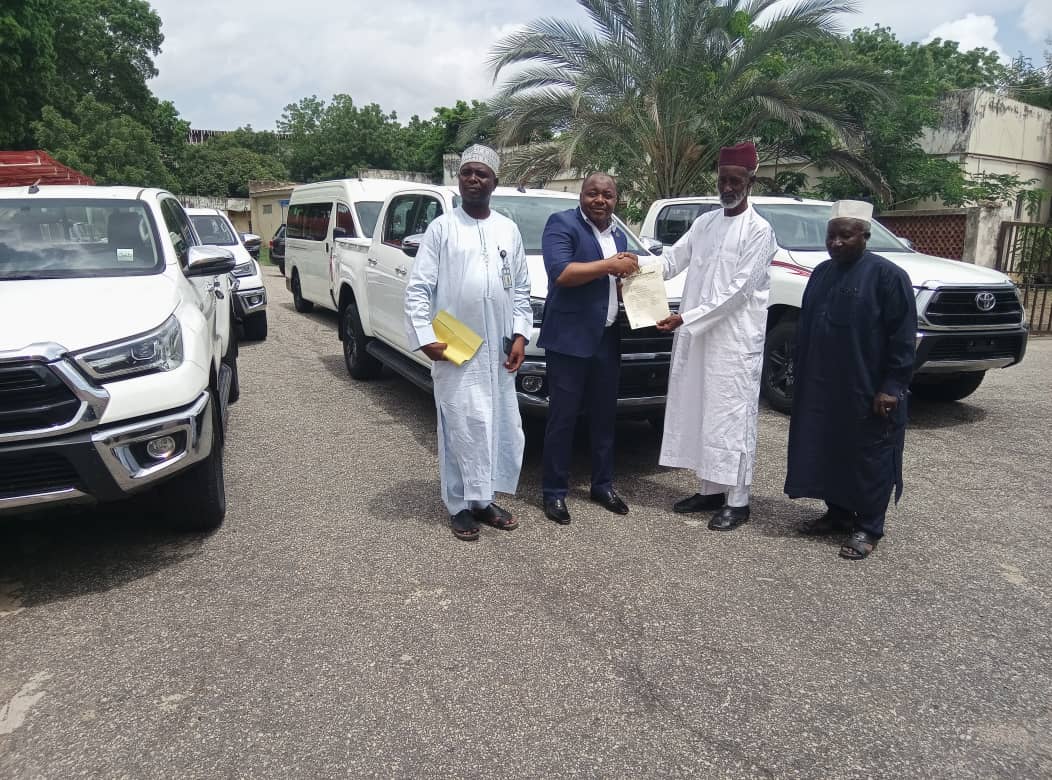
The vehicles comprise four units of 2025 model Toyota Hilux trucks and one Toyota Hiace bus. They were handed over to the Chairman of the committee, Muhuyi Magaji Rimingado, by the Secretary to the State Government, Umar Faruk Ibrahim, at the Cabinet Office in Kano.
Ibrahim said the committee had demonstrated commitment and recorded impact within a short period of its inauguration, necessitating additional operational support.
He said the provision of the vehicles was aimed at strengthening the committee’s mobility, field operations, intelligence coordination, and engagement with stakeholders in the fight against drug abuse and trafficking.
The Special Task Force was established by the Kano State Government under Governor Abba Kabir Yusuf as part of efforts to address substance abuse, illicit drug trafficking, and related criminal activities.
The committee comprises representatives of the National Drug Law Enforcement Agency, NDLEA, Nigeria Police Force, Department of State Services, DSS, Nigeria Customs Service, Nigeria Immigration Service, Nigeria Security and Civil Defence Corps, NSCDC, Kano State Hisbah Board, Kano Emirate Council, Council of Ulama, Ministry of Health, Pharmaceutical Society of Nigeria, civil society organisations, and other partners.
The task force is mandated to coordinate intelligence gathering, dismantle drug distribution networks, support enforcement operations, promote public awareness, and strengthen rehabilitation and preventive measures, particularly among young people.
Speaking on behalf of the committee, Rimingado expressed appreciation to Governor Yusuf for the support and assured that the committee would redouble efforts while maintaining professionalism in the fight against drug-related crimes.
He said the committee would continue to collaborate with security agencies, traditional institutions, religious leaders, educational institutions, community leaders and civil society organisations to create a safer and healthier environment for residents of the state.