

The Deputy Vice-Chancellor of the Federal University of Education (FUE), Zaria, Prof. Suleiman Balarabe, has called on students, staff and members of the public to embrace healthy lifestyles and preventive healthcare as part of efforts to curb the spread of HIV/AIDS and other communicable diseases.
Read also: NIGERIAN ARMY EXPANSION: COAS INDUCTS 6,419 COMBAT-READY SOLDIERS AT DEPOT, ZARIA
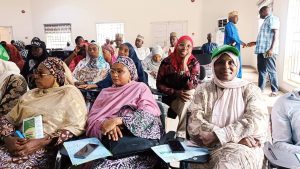
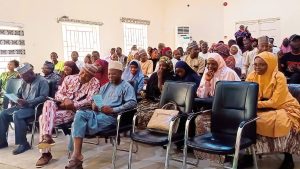
A statement signed by the media aide to the VC,Sani Lawal maqarphy said Prof. Balarabe made the call while representing the Vice-Chancellor, Prof. Yahaya Isa Bunkure and declaring open the “Health Horizons: HIV/AIDS and Health Symposium Awareness,” organised by the University’s Community Wellness and Counseling Hub in collaboration with the Kaduna State Agency for the Control of AIDS (KASACA) and the Kaduna State Contributory Health Management Authority (KADCHMA), held on Tuesday, 30th June, 2026, at the Suleiman Balarabe Senate Chamber, Federal University of Education, Zaria.
The Deputy Vice-Chancellor commended the Community Wellness and Counseling Hub, led by Dr. Bilkisu Bashir Aliyu, for organising the timely awareness programme. He advised students to refrain from illicit sexual relationships, stressing that all religions prohibit fornication and adultery.
Prof. Balarabe further encouraged staff and members of the general public to adopt healthy lifestyles and undergo regular medical screening to know their health status.
Speaking at the event, the Overseer of the Kaduna State Agency for the Control of AIDS (KASACA), Dr. Bugawa Nuhu Butawa, described the symposium as timely, noting that more than 300 new HIV infections were recorded in Kaduna State in June alone. He attributed the increasing number of infections largely to inadequate awareness and poor health-seeking behaviour.
According to him, KASACA has intensified community sensitisation campaigns across the State to encourage individuals to know their HIV status, explaining that early diagnosis remains the gateway to effective treatment and prevention. He stated that HIV treatment is aimed at suppressing the virus, improving the quality of life of infected persons and preventing further transmission, while urging students to abstain from risky sexual behaviours.
The Medical Director of the Federal University of Education, Zaria, Dr. Abdullateef Yahaya, commended the organisers for selecting a topic that directly addresses the health needs of the University community. He noted that the programme was not only academic but also a vital health intervention aimed at promoting healthy living. He advised students and young people to avoid unprotected sexual activities and embrace regular HIV testing as part of responsible health practices.
Earlier, the Director of the Kaduna State Contributory Health Management Authority (KADCHMA), represented by Malam Ibrahim Allimi Muhammad, gave an overview of the Authority’s activities, noting that it currently provides healthcare services to over 100,000 vulnerable persons across Kaduna State at no cost to the beneficiaries.
Presenting the lead paper, Dr. Adam Muhammad, Registrar of Dagama School of Health, Elite, explained that HIV attacks the body’s immune system by destroying white blood cells, thereby weakening the body’s ability to fight infections. He distinguished HIV from AIDS, explaining that HIV is the virus responsible for the infection, while AIDS is the advanced stage of the disease resulting from prolonged damage to the immune system.
Read also: EXECUTIVE COUNCIL MEETING,ENGR JAGA CHAIRS 19 COUNCIL MEETING,FLAGS OFF NPC E-REGISTRATION IN ZARIA.
He further explained that HIV is transmitted through infected blood and certain body fluids entering the bloodstream through mucous membranes or open wounds. He added that although the virus was first identified globally in 1959, Nigeria recorded its first confirmed HIV case in Lagos in 1985.
In a presentation on HIV, its basics, transmission, treatment and prevention, Dr. Zakari Maryam of the National Public Health Institute (NPHI), SAYE, Zaria, emphasised that awareness remains the most effective strategy for preventing HIV infection.
She urged participants to know their HIV status, avoid multiple sexual partners and take advantage of available treatment services. She also dispelled common misconceptions about the disease, including the false belief that HIV can be transmitted through mosquito bites or that it has no treatment.
Speaking on Tuberculosis, another health expert from the National Public Health Institute, SAYE, Zaria, Dr. Bonire Oluwasanmi, described TB as one of the world’s oldest infectious diseases, discovered by Robert Koch in 1882. He noted that Nigeria remains among the countries with the highest burden of tuberculosis and expressed concern that many cases are not diagnosed early.
He explained that TB is transmitted through the air when infected persons cough, sneeze, sing or talk, but clarified that it cannot be spread through sharing food, touching clothes, sexual intercourse or blood transfusion. He identified persistent cough, chest pain, fever, loss of appetite, night sweats, weight loss and coughing up blood as common symptoms, adding that diagnosis and treatment are available free of charge in Nigeria.
Delivering a presentation on prostate health, Dr. Celestine Ilo described the prostate as a male reproductive gland located beneath the urinary bladder. He explained that prostatitis is an inflammation of the gland characterised by pain, discomfort, fever and frequent urination, while prostate cancer occurs when abnormal cells grow uncontrollably and may spread to other parts of the body if left untreated.
Also speaking, Dr. Maryam Ibrahim presented a paper on Hepatitis, describing the disease as an inflammation of the liver and a major public health concern. She explained that Hepatitis exists in various forms, including Hepatitis A, B, C, D and E, each with different modes of transmission.
According to her, about 240 million people worldwide are living with chronic Hepatitis B, which can be transmitted through unprotected sexual contact, mother-to-child transmission, sharing contaminated sharp objects and unsafe injections. She encouraged participants to embrace regular screening, vaccination where applicable and early treatment.
In her vote of thanks, Dr. Bilkisu Bashir Aliyu expressed appreciation to the University Management, the collaborating agencies, guest speakers and participants for contributing to the success of the symposium.
Read also: NITT DG COMMISSIONS NEW SOCIAL CENTRE
The symposium was attended by members of the University’s Management, including the Acting Registrar, Malam Shehu Iya Sa’idu, represented by Mrs. Josephine Sule; the Acting Bursar, Malam Muhammad Kabir Aliyu; Directors, Deans, Heads of Departments, traditional and political leaders, youth organisations, students and participants from various institutions.