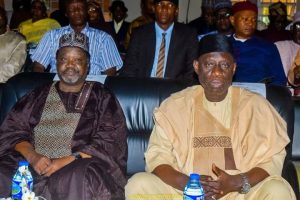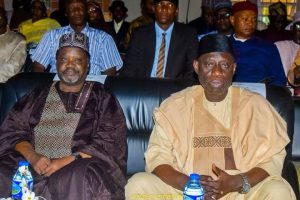

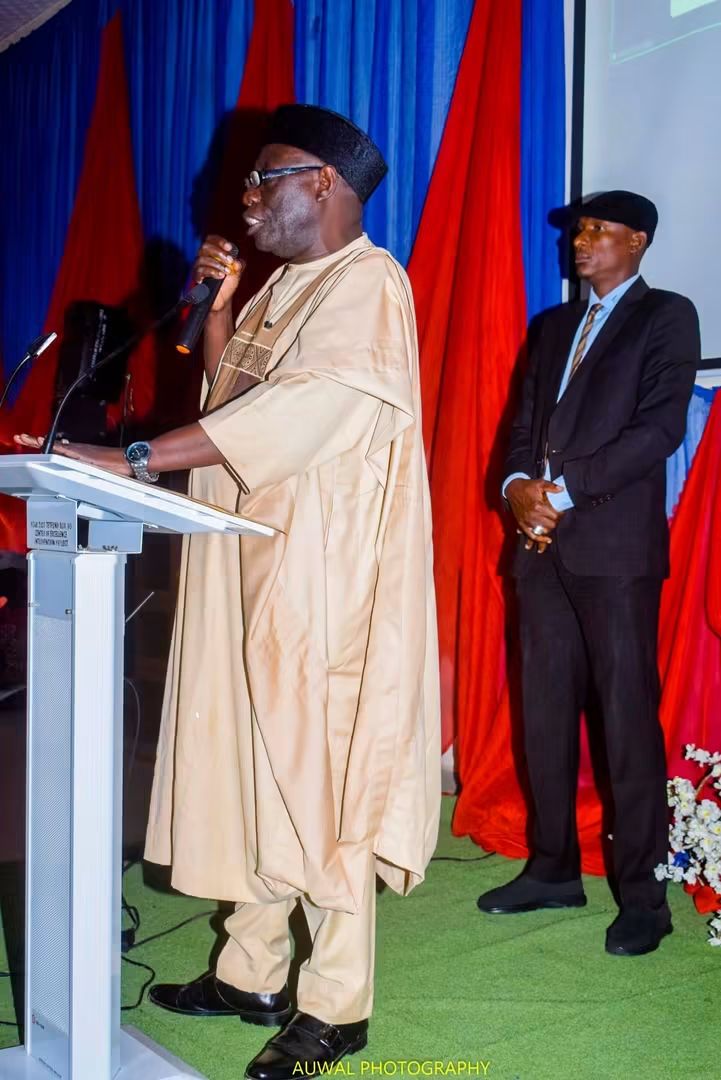
The Vice-Chancellor, Federal University of Education, Zaria, Prof. Yahaya Isa Bunkure, has urged universities to adapt their approaches to education in response to the rapid emergence of artificial intelligence and other digital technologies.
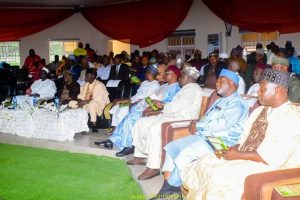
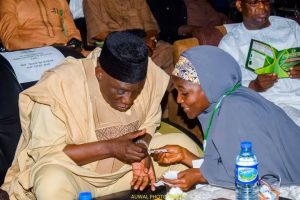
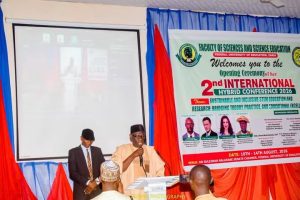
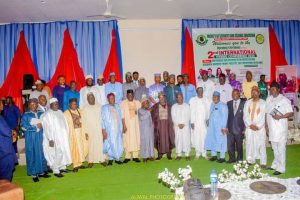
Prof. Bunkure made the call at the opening of the four-day Second International Hybrid Conference 2026, organised by the Faculty of Sciences and Science Education, held on 11th August 2026 at the Dr Suleiman Balarabe Chamber of the University.
The conference was themed “Sustainable and Inclusive STEM Education and Research: Bridging Theory, Practice, and Educational Excellence.”
Prof. Bunkure said the rapid development of artificial intelligence and other digital technologies had made it necessary for educational institutions to review conventional approaches to teaching and learning and prepare graduates for emerging challenges.
He stressed the need to equip graduates with digital competence, critical thinking, creativity, ethical values and the ability to adapt to changing circumstances.
The Vice-Chancellor also called for the preservation and integration of indigenous knowledge into modern education, particularly in areas such as agriculture, medicine, culture, language, architecture and environmental management.
He advocated stronger partnerships among government, academia, industry, civil society and development organisations to promote sustainable development, saying the conference provided an opportunity for scholars and other stakeholders to discuss issues relating to research, innovation and STEM education.
Declaring the conference open, the Chairman of the occasion and Vice-Chancellor, Federal University of Education, Kontagora, Prof. Faruk Rashid Haruna, urged participants to make use of the keynote presentations, technical sessions and panel discussions to develop practical recommendations for addressing educational and developmental challenges.
The Dean of the Faculty of Sciences and Science Education, Dr Mu’awiya Haruna Usman, called for changes in the education system to produce entrepreneurs, innovators and problem-solvers capable of addressing contemporary challenges.
Dr Usman said universities needed to redesign their curricula to provide students with practical and entrepreneurial skills, while ensuring that STEM education remained accessible to learners irrespective of gender, disability, socioeconomic status or geographical location.
He also called for stronger collaboration among universities, industries and research institutions to translate scientific knowledge into practical solutions.
The keynote speaker, Prof. A.D. Onu, called for stronger university-industry collaboration, curriculum reform and increased investment in research infrastructure.
Prof. Onu said educational excellence should be assessed not only through academic qualifications but also through graduates’ ability to demonstrate innovation, creativity, entrepreneurship, critical thinking, ethical reasoning and social responsibility.
He urged universities to develop practical solutions to community challenges, including renewable energy, water purification, waste management, recycling, health education and sustainable production.
Prof. Onu also advocated greater use of Artificial Intelligence, Learning Management Systems, simulation technologies, Open Educational Resources and digital assessment.
One of the lead speakers, Prof. Dr Mardeni Roslee of Multimedia University, Malaysia, presented a paper titled “Smart Agriculture Monitoring System with Mobile Application.”
His presentation examined the use of Artificial Intelligence, Internet of Things sensors and unmanned aerial vehicles in agricultural monitoring.
Prof. Roslee explained that smart agriculture could use real-time data on soil conditions, weather, crop health and water levels to support decision-making. He also discussed the use of AI and machine learning to analyse data and provide recommendations for irrigation, fertilisation and other agricultural interventions.
He noted that sensors, UAVs, LoRaWAN networks and digital platforms could help address some challenges associated with traditional agricultural monitoring, including high costs, manpower requirements, delayed data collection and slow decision-making.
Prof. Roslee also stressed the importance of research collaboration and impact, urging researchers to focus on practical solutions.
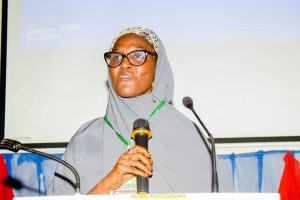
Joining the conference virtually from Greece, Prof. Rania Lampou spoke on the use of digital technologies to promote inclusive education and expand access to learning.
She advocated the use of assistive technologies, accessible learning platforms, differentiated instruction and flexible assessment systems to accommodate diverse learners.
Prof. Lampou, however, noted that the digital divide remained a challenge, particularly in communities with limited access to devices, reliable internet connectivity and digital literacy.The lead speaker from Bayero University, Kano, Prof. Garba Shuaibu, also contributed to discussions on the future of STEM education and research.
Representing the Kaduna State Commissioner for Housing and Urban Development, Dr Mohammed Sani commended the University Management and the Faculty for organising the conference.
Dr Sani noted that the hosting of international conferences had increased the University’s academic engagements.
The Chairman of the Academic Staff Union of Universities, Dr Ubale Ismaila Alhaji, commended the University Management and the conference organisers for bringing scholars from within and outside Nigeria together.
He praised the Local Organising Committee for its work and encouraged the Vice-Chancellor to sustain efforts towards strengthening the University’s academic activities.
The Chairperson of the Local Organising Committee, Dr Ramatu Asabe Nuru, thanked the University Management, speakers, guests, sponsors, staff, students, media organisations and members of the various committees for their contributions to the conference.
She urged participants to engage in the technical sessions, plenary discussions and workshops and work towards practical outcomes in sustainable and inclusive STEM education.
The conference attracted participants physically and virtually from different parts of the world