


*_Muhammad Iskeel Abdullahi*_
In the intricate tapestry of Nigeria’s political landscape, few scenes capture the profound interplay of power, mortality, and unity quite like the recent events surrounding former Kaduna State Governor Mallam Nasir El-Rufai. Detained by the Independent Corrupt Practices and Other Related Offences Commission (ICPC) since February 18, 2026, over allegations of financial misconduct, El-Rufai was granted compassionate temporary release following the death of his mother, Hajiya Umma El-Rufai, in Cairo, Egypt, on March 27, 2026.
What followed was not merely a funeral but a rare convergence: his residence. transformed into a melting pot of Nigeria’s political elite, rivals and allies alike.
Attendees included Governor Uba Sani(his successor and one-time protégé with whom relations had soured), National Security Adviser Nuhu Ribadu, Emir of Kano Muhammad Sanusi II, and former Vice President Atiku Abubakar, among others.
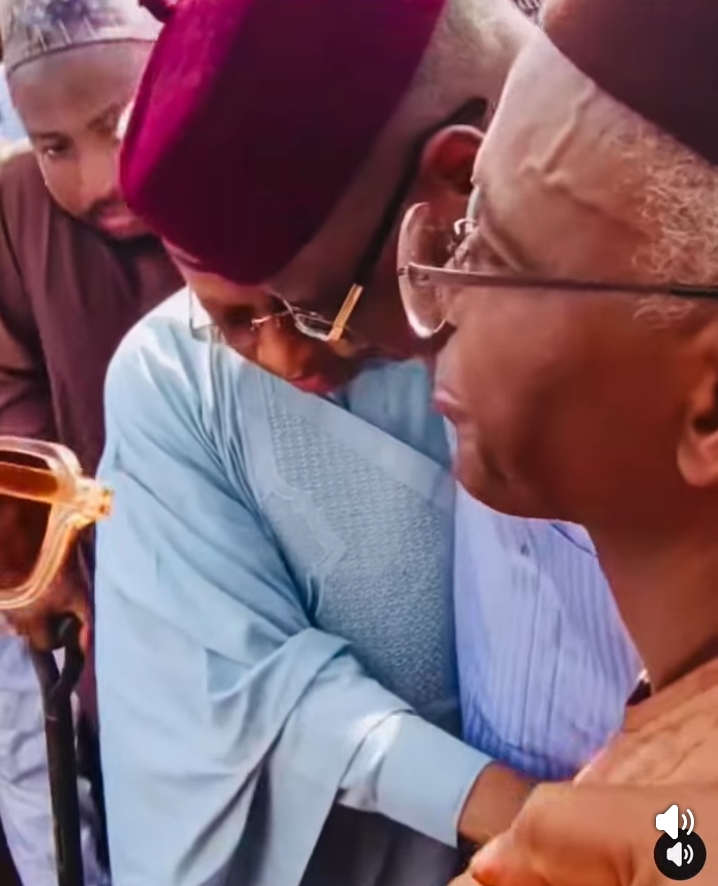
Amid the mourning, reconciliation hung in the air. Cleric and former Minister Isa Ali Pantami facilitated a public handshake and exchange of forgiveness between El-Rufai and Governor Uba Sani during the Janazah at the Gudu Cemetery Abuja, a moment broadcast widely and hailed (and debated) as a peacemaking gesture.
These are not isolated acts of courtesy; they echo a deeper, recurring truth in Nigerian politics: high-profile reconciliation attempts, often catalyzed by personal loss or national exigency, are quiet but potent instruments for stitching together a fractured federation.
Nigeria’s history is replete with such moments where personal grief, political pragmatism, or visionary leadership has compelled enemies to shake hands for the greater good.
1. Post-Civil War Reconciliation (1970): The Dawn of “No Victor, No Vanquished”
After the 1967–1970 Nigerian Civil War, General Yakubu Gowon’s Federal Military Government faced a shattered nation. Rather than punitive retribution, Gowon proclaimed the famous “No Victor, No Vanquished” doctrine in his “Dawn of National Reconciliation” broadcast. This was followed by the 3Rs policy; Reconciliation, Rehabilitation, and Reconstruction. Igbo soldiers and civilians were granted amnesty, reintegrated into the civil service and military, and assured safety and property rights. While implementation had flaws and lingering grievances persist, the policy prevented a cycle of revenge and laid the foundation for post-war stability.
2. The APC Merger and the 2015 Power Shift (2013–2015)
Bitter rivals from the Action Congress of Nigeria (ACN), Congress for Progressive Change (CPC), All Nigeria Peoples Party (ANPP), and dissident PDP factions set aside decades of animosity to form the All Progressives Congress (APC). Leaders like Bola Tinubu, Muhammadu Buhari, and others reconciled ideological and personal differences to challenge the PDP’s dominance. The result? Nigeria’s first successful opposition victory at the presidential level in 2015; a masterclass in elite reconciliation that proved political unity could birth democratic renewal.
3. Obasanjo-Atiku Reconciliation (2018)
The long-standing feud between former President Olusegun Obasanjo and his estranged Vice President Atiku Abubakar marked by impeachment threats and public insults found resolution through mediation by religious leaders, including Pastor David Oyedepo. The 2018 handshake was framed as essential for national stability ahead of elections, demonstrating how elder statesmen can model maturity for younger politicians.
These episodes, like El-Rufai’s recent gathering, reveal a pattern: Nigerian politics thrives not on perpetual enmity but on strategic forgiveness.
Godfather-protégé rifts (common since 1999) often collapse into bitterness, yet funerals, national crises, or electoral imperatives repeatedly force reset buttons.
The Significance: Building a United, Virile Nation
Why do these reconciliations matter beyond headlines? They are the invisible scaffolding of a “virile” Nigeria, one that is resilient, cohesive, and forward-moving.
National Unity Over Division:
In a multi-ethnic, multi-religious federation, unchecked political vendettas fuel ethnic suspicion and insecurity.
Reconciliation signals that personal or factional interests must yield to the collective. Gowon’s 3Rs prevented further fragmentation; the APC merger delivered the first peaceful power transfer. El-Rufai’s moment similarly bridges North-South, intra-party, and generational divides.
Stability and Economic Progress:
A reconciled elite reduces the risk of political violence, policy reversals, and investor flight. Nigeria’s history shows that when leaders feud, governance stalls; corruption probes become weapons, development suffers.
Unity creates the enabling environment for infrastructure, security, and poverty reduction.
Democratic Maturity: True democracy is not winner-takes-all annihilation but the art of compromise.
High-profile handshakes model this for citizens, countering cynicism and youth apathy. They affirm that even “embattled” figures deserve due process and humanity, compassionate release for burial being a case in point.
Legacy for Future Generations: As Nigeria eyes 2027 and beyond, such gestures plant seeds of a political culture where mentorship evolves into statesmanship, not betrayal. They reinforce the federal character principle and power-sharing norms embedded in our 1999 Constitution, turning potential flashpoints into bridges.
Critics may dismiss these as photo-ops or elite self-preservation. Yet history proves otherwise: *nations that reconcile thrive; those that nurse grudges stagnate.* South Africa’s Truth and Reconciliation Commission and Rwanda’s post-genocide Gacaca courts offer global parallels.
Nigeria’s homegrown versions are equally vital.
A Call to Sustain the Momentum
The assemblage at El-Rufai’s residence was no accident of fate; it was Nigeria at its most human and hopeful. As the Vice President and figures like Pantami extended olive branches, they reminded us that politics, at its best, serves the republic, not egos.
For Nigeria to become the virile giant of Africa’s dreams, we must institutionalize reconciliation through national dialogues, elder mediation councils, and a politics that values forgiveness as strength. Let El-Rufai’s grief become a catalyst: may more leaders choose the handshake over the grudge, the future over the feud.
In the words of Gowon’s 1970 broadcast, we stand once more at “the dawn of national reconciliation.” The question is whether we will seize it. Nigeria’s unity is not inherited, it is forged, one profound gesture at a time.
*Muhammad Iskeel Abdullahi Broadcast Journalist Development Advocate Convener Journalists For Development*