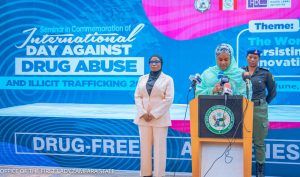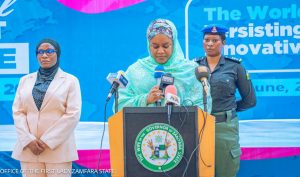

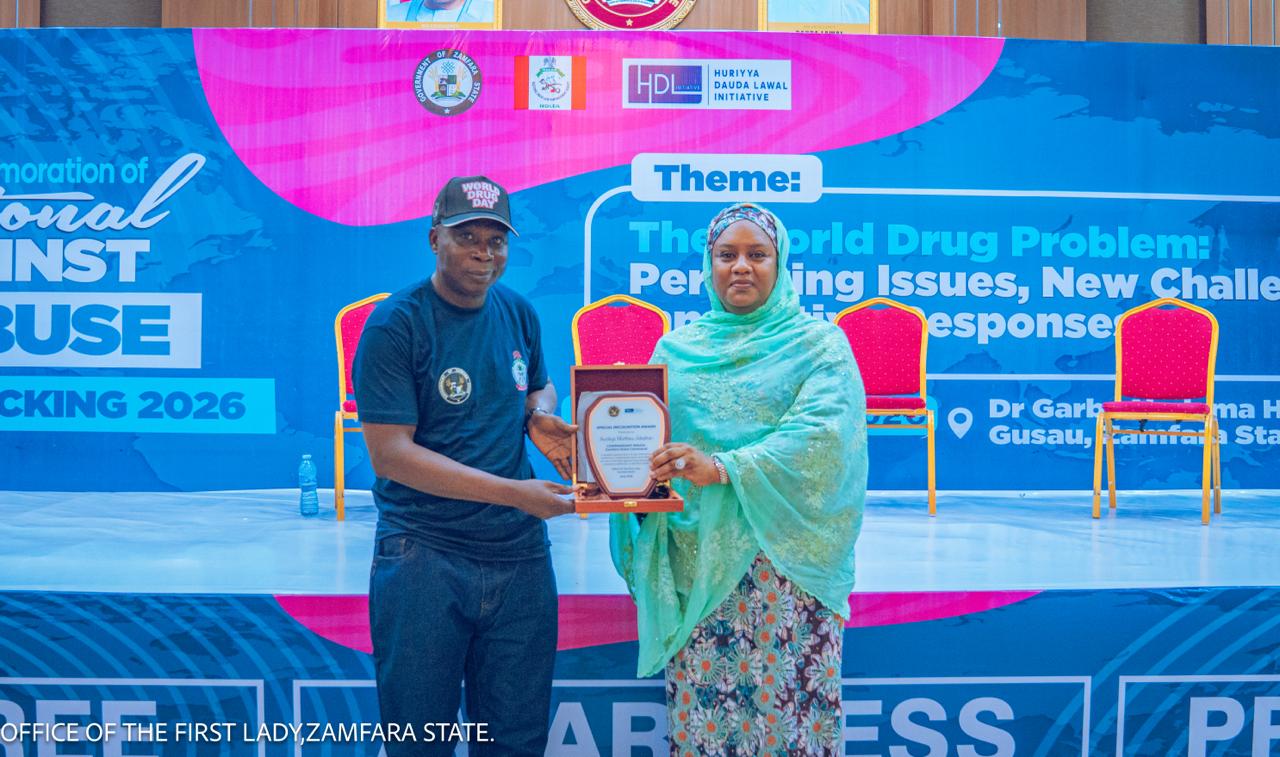
The First Lady of Zamfara State, Hajiya Huriyya Dauda Lawal, has called for stronger collaboration among stakeholders to combat drug abuse and illicit drug trafficking, described the menace as a major threat to public health, security and the future of young people.
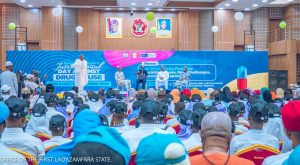
She made the call while speaking at a seminar organised to commemorate the International Day Against Drug Abuse and Illicit Trafficking held in Gusau, the Zamfara State capital.
Hajiya Huriyya said drug abuse was not only a public health concern but also a serious social and security challenge that continues to affect families, communities and young people, adding that illicit drug trafficking fuels crime, violence and insecurity while making dangerous substances more accessible to vulnerable members of society.
She urged parents, teachers, religious and traditional leaders, government institutions, security agencies, civil society organisations and community members to intensify efforts to educate young people on the dangers of drug abuse, support initiatives aimed at curbing illicit drug trafficking and provide positive opportunities for the youth.
The First Lady stressed that people struggling with drug addiction should be supported rather than stigmatised, noting that recovery is possible through understanding, compassion and access to quality rehabilitation and counselling services.
She also appealed to youth leaders and student representatives to become ambassadors of the anti-drug campaign by taking the message to their schools, villages and communities and encouraging their peers to reject drug abuse, embrace education, hard work, discipline and responsible living.
Hajiya Huriyya further disclosed that Governor Dauda Lawal has approved the construction of a drug abuse rehabilitation centre in Zamfara State as part of his administration’s commitment to providing treatment, rehabilitation and support for people affected by substance abuse.
Also speaking, the Commandant of the National Drug Law Enforcement Agency (NDLEA) in Zamfara State, Mr. Mathew Adediran, disclosed that the command had arrested about 80 suspected drug traffickers and dealers and seized more than 3,000 kilograms of illicit drugs in the state over the last two years.
According to him, the agency has intensified prosecution efforts, leading to the conviction and sentencing of more than 100 suspects to various jail terms within the past year.
Adediran, however, expressed concern over the absence of a rehabilitation centre in Zamfara, describing it as one of the major challenges facing the fight against drug abuse in the state.
He explained that in the absence of such a facility, the agency provides counselling services and refers drug-dependent persons whose families can afford treatment to rehabilitation centres in neighbouring states, including Sokoto, Katsina and Kaduna.
The NDLEA Commandant also highlighted the agency’s Voluntary Drug Testing initiative, introduced by the NDLEA Chairman to encourage early detection of drug abuse. He urged parents and guardians who suspect their children or wards are abusing drugs to bring them to the agency for confidential screening.
“Early detection is one of the most effective ways of helping drug users recover before their condition worsens,” Adediran said.
He revealed that more than 500 people voluntarily underwent drug tests in the last year, with about 95 per cent of those tested being men. He, however, noted a disturbing rise in the number of women involved in drug abuse.
According to him, it was previously rare to arrest a female suspect, but today one or two women are found among every 10 drug suspects, describing the trend as alarming and one that requires urgent collective action.
Speaking on the prevalence of drug abuse, Adediran said the latest survey conducted by the United Nations Office on Drugs and Crime (UNODC) and relevant Nigerian agencies placed Zamfara’s drug abuse prevalence rate at 13.5 per cent, compared with Kano State’s 16 per cent. He added that although a new national survey is being planned, the available figures highlight the need for stronger interventions, particularly the establishment of a rehabilitation centre.
Earlier, the Zamfara State Commissioner for Planning and Budget, Abdulmalik Gajam, said the fight against substance abuse must go beyond law enforcement by focusing on prevention, treatment, rehabilitation and creating opportunities for young people. He reaffirmed the state government’s commitment to investing in education, employment, healthcare and rehabilitation programmes to reduce drug demand.
Gajam urged parents to build strong relationships with their children, monitor their activities and encourage open communication, while advising teachers to identify early warning signs of drug use before experimentation develops into addiction. He also called on the private sector to support skills acquisition and entrepreneurship programmes to reduce unemployment among youths.
He commended security agencies for disrupting drug trafficking networks and urged the media to sustain public enlightenment campaigns on the dangers of drug abuse rather than glorifying substance use. He warned young people that drugs do not guarantee confidence or success but only create temporary illusions that destroy future opportunities.
Panel discussions at the seminar focused on practical strategies for addressing drug abuse through prevention, rehabilitation, public awareness and stronger collaboration among stakeholders. Participants unanimously stressed that governments, security agencies, traditional and religious institutions, civil society organisations, the private sector and members of the public must work together to eliminate the growing menace of drug abuse and safeguard the future of Zamfara State.