


Babayola M. Toungo
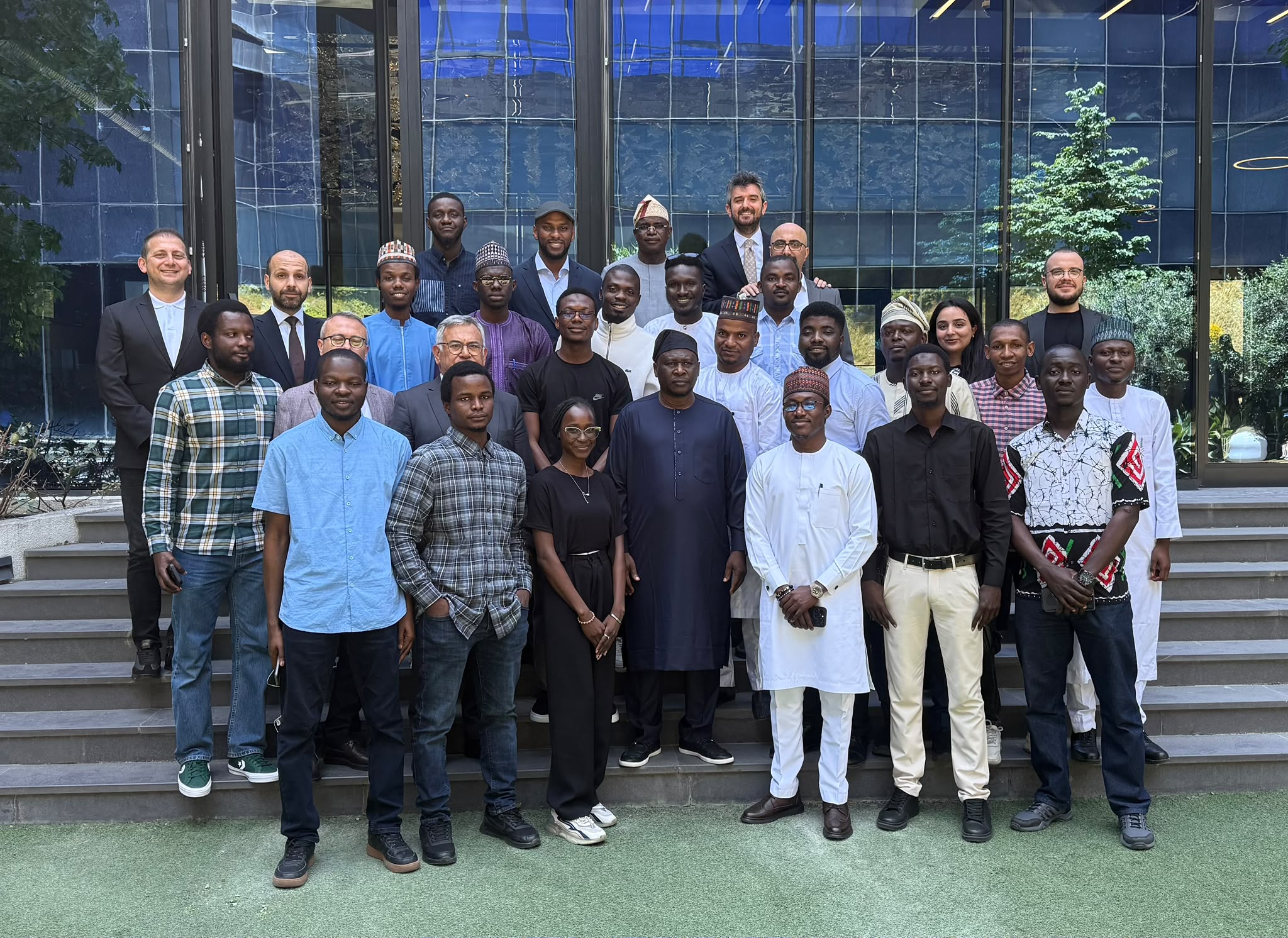
In politics, some journeys are measured not by the distance travelled but by the message they convey. Governor Ahmadu Umaru Fintiri’s visit to Adamawa State scholarship students studying in Turkey falls squarely within that category. Beyond the photographs, handshakes, and exchanges with students, the visit carried a deeper significance: it reaffirmed the central place of education and human capital development in the future of Adamawa State.
In a country where public discourse often revolves around roads, bridges, and other physical infrastructure, it is easy to overlook the fact that the most valuable investment any government can make is in people. Buildings may define the skyline of a state, but it is educated and skilled citizens who ultimately define its destiny. By taking the time to meet Adamawa students thousands of kilometres away from home, Governor Fintiri underscored an important principle: development is not only about constructing infrastructure; it is equally about constructing human capacity.
The visit was symbolic in many respects. It demonstrated that the administration views its scholarship beneficiaries not merely as recipients of government support but as strategic assets whose success is tied directly to the future prosperity of the state. It sent a powerful message that government support does not end once students leave the shores of Nigeria. Rather, they remain part of a larger vision aimed at producing a generation equipped with the knowledge, skills, and global exposure necessary to transform Adamawa.
The importance of this cannot be overstated. Across the world, societies that have achieved sustained development have done so largely because they invested heavily in education and human capital. Nations rise when they deliberately cultivate scientists, engineers, doctors, technologists, entrepreneurs, researchers, and professionals capable of driving innovation and economic growth. The scholarship programme is therefore more than an educational intervention; it is an investment strategy for the future.
By visiting the students in their academic environment, Governor Fintiri was also able to gain firsthand insight into their experiences, challenges, and aspirations. Such engagement strengthens the bond between government and beneficiaries while reinforcing accountability on both sides. The students are reminded that the resources committed to their education come with expectations of excellence, discipline, and service to society.
More importantly, the visit highlights a governing philosophy that increasingly places human capital at the centre of development planning. Adamawa’s progress in recent years has often been discussed in terms of infrastructure renewal, urban development, and public sector reforms. Yet the scholarship initiative demonstrates that the administration understands a deeper truth: infrastructure may accelerate development, but human capital sustains it.
The students studying in Turkey today represent more than individual success stories. They are future doctors who may strengthen healthcare delivery across the state. They are future engineers who may design critical infrastructure. They are future entrepreneurs who may create jobs and expand economic opportunities. They are future educators who may inspire the next generation. In many ways, they embody the long-term dividends of today’s investments.
There is also a broader lesson in the governor’s engagement with these students. Leadership is often judged by what is visible in the present. However, the most consequential leaders are frequently those who make investments whose full benefits may only be realized years later. Scholarship programmes belong to that category of investments. The returns are not immediate, but when they materialize, they can transform entire societies.
For Adamawa, the strategic value of nurturing globally trained professionals is immense. As the world becomes increasingly knowledge-driven and technologically advanced, states that fail to invest in education risk falling behind. Conversely, states that cultivate skilled human resources position themselves to attract investment, stimulate innovation, and compete effectively in a rapidly changing global economy.
Governor Fintiri’s visit therefore goes beyond a routine engagement with students abroad. It is a statement of intent. It reflects an administration that recognizes that the future of Adamawa will not be determined solely by the roads it builds or the projects it commissions, but by the quality of the men and women it prepares to lead the next chapter of its development.
Ultimately, the students in Turkey are more than scholarship beneficiaries; they are ambassadors of Adamawa’s aspirations. They represent the state’s belief in the transformative power of education and the conviction that the surest pathway to lasting development lies in empowering people.
In meeting them, Governor Fintiri was, in many respects, meeting the future itself.